In Part 1, we rode the wave of a successful rebranding for studenta. We built the channels—a new website, a thriving Instagram—and the students responded. The flow of interest was powerful, so powerful that it threatened to overwhelm the very team it was meant to support. We had solved the problem of how to speak. Now we faced a new challenge: how to listen at scale.
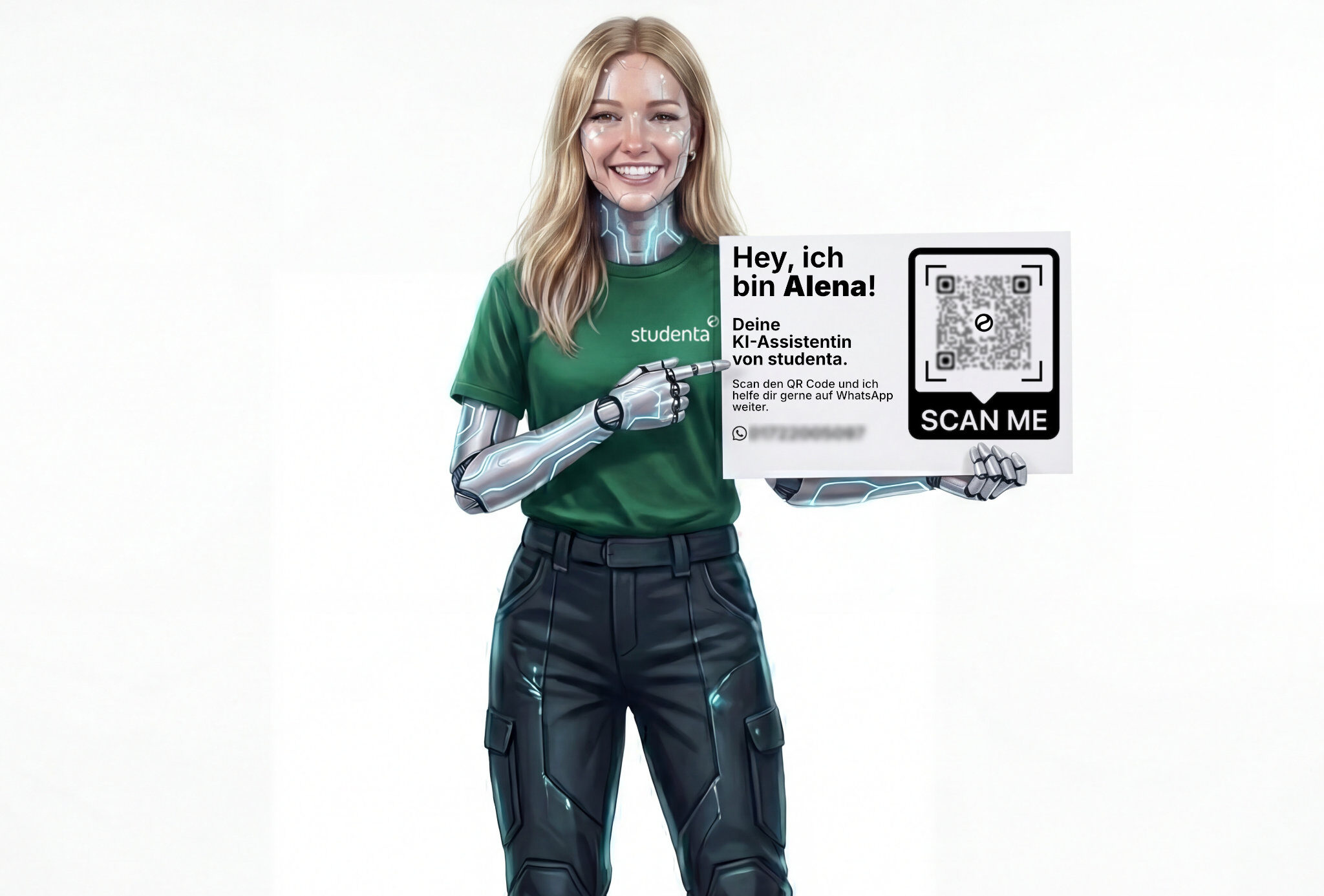
The answer wasn’t to build a bigger boat or to shout louder. The answer was to build a silent reef beneath the surface—an intelligent, automated system that could absorb the energy of the waves and create a calm harbor behind it. We call her Alena.
Alena is not a flashy, conversational AI designed to impress. She is a purpose-built AI assistant, a piece of quiet infrastructure created for one reason: to remove the administrative burden from Lena and her HR team. She is the silent assistant working below the surface.
The Architecture: Building the Reef
Her workflow is designed for clarity and reliability, a system of interlocking parts that turns chaotic energy into clean, actionable data.
- The Outer Edge (Intake): It starts on WhatsApp or a simple web form. This is where an applicant first makes contact, sending their CV as a PDF. The first point of order is a check for a certificate of matriculation. It’s a simple, binary gatekeeper.
- The Lagoon (Staging): Once through the gate, the PDF is moved to a dedicated Google Drive. It’s automatically renamed using a strict
Nachname_Vorname_Lebenslaufconvention. This simple act is the beginning of creating order. From there, an AI agent reads the document, extracting the key data points—name, contact info, profile summary—and populates a structured Google Sheet. This is our calm lagoon, a staging area where data is organized before it’s presented to the team. - The Bedrock (The Source of Truth): A crucial principle of any system is a single source of truth. For studenta, that bedrock is Papershift, their primary HR tool. Alena never writes directly to it. Instead, the Google Sheet serves as a review dashboard. A human team member—Lena or someone from her team—validates the entry and manually sets the status to “Aktiv.” Only then, with human approval, is the clean data automatically exported to Papershift. This human-in-the-loop design prevents data pollution and ensures the core system remains pristine.
The Quiet Breakthrough
There’s always a moment of tension when a new system goes live. The first time we watched the flow, we weren’t looking for a celebration. We were watching for leaks, for failures. The breakthrough came not with a bang, but with a quiet sense of satisfaction. We watched application after application flow seamlessly from a WhatsApp message into a perfectly formatted, human-verified entry in Papershift, all without a single manual keystroke from the team.
The real beauty was watching the AI handle the sheer variety of human-made CVs—the strange fonts, the creative layouts. The system didn’t break; it simply, calmly, did its job.
The Next Set: Expanding the Reef
This is just the beginning. The reef is designed to grow. We’re already planning the next additions: automating routine onboarding tasks and developing an internal version of Alena to act as a secure knowledge base for existing employees.
The journey that started with a walk through Münster wasn’t about marketing or hype. It was about seeing a system under strain and using technology not to add more noise, but to create calm. By building a silent, reliable assistant, we gave the studenta team their most valuable resource back: their time. Time to focus on the human work that truly fulfills their mission of improving student life.
Leave a Reply