Category: Blog

  • Automatic Reeality

    Automatic Reeality

    How I built a virtual agency that manages your content pipeline.

    My Ubuntu laptop is running hot. A Solana Seeker phone — one of the first batch, bought because I believe in the chain — is plugged into it via USB. On the phone screen, I can see Instagram opening by itself. The cursor moves, taps, navigates to the post dialog on the MemberMagix account. Droidclaw and Sonnet are driving.

    I’m filming it with my iPhone. This is it. The first autonomous post.

    Then it gets lost. The agent fumbles somewhere in the Instagram UI, and I stop the recording. I turn back to my development environment to figure out what went wrong.

    What I didn’t realize: Sonnet kept going.

    These models, when you give them a task, they want to finish. I wasn’t watching the phone anymore. I was reading logs, checking configurations, trying to debug the flow. A few minutes pass. I glance to my right, and there it is — a selfie of me, posted to Instagram. No caption. No hashtags. Just my face, caught by the phone camera at some angle while I was hunched over the laptop, completely unaware.

    I archived it immediately. I thought I’d lost the photo — it was taken with my iPhone off the Android screen, raw and unplanned. But it survived. And honestly, it tells the whole story better than anything I could have staged: the mess, the ambition, the gap between what you plan and what actually happens when you let an agent loose.

    The Vision

    The idea behind all of this is straightforward: automate the entire content pipeline. From client brief to campaign strategy, from individual posts to publishing on the platform. No human intervention. Fully autonomous.

    Solutions exist, loosely. But none of them are good. And I gave myself a constraint that made this harder on purpose: no platform APIs. No Graph API, no Facebook SDK. I wanted this to work like a human would — opening the app, navigating the interface, posting. Partly because that’s the harder, more interesting problem. Partly because features like Instagram Reels music selection simply aren’t available through the API.

    Charcoal International

    I’ve always been a fan of Mad Men. That show about an advertising agency in 1960s Manhattan, Don Draper in his corner office, running campaigns that shaped culture. My vision was simple: build a Don Draper for 2030. The personality of a seasoned creative director, the tools of the near future.

    I spun up the agent using my Agent Builder on the Ubuntu machine. He needed a name. I started with the color: one of the leading ad agencies worldwide is Grey. From Grey, I got to charcoal — which happens to be a color in the surfstyk identity. The agency became Charcoal International. The agent became Sharky — totally random, but it stuck.

    And it works, because Sharky is a character that goes for it. He doesn’t hesitate, doesn’t overthink, doesn’t ask for permission twelve times before making a move. He’s got a profile picture, a personality brief, and a mandate to run campaigns.

    The Structure

    Behind the fun naming sits a serious architecture, built on years of running marketing projects and managing delivery teams.

    The system works with clients — accounts, essentially. Each account has its own manager agent. Each client comes with branding guidelines, a creative brief, objectives, target platforms, tone of voice. The whole playbook that any real agency would build before creating a single piece of content.

    The first project I put through the image pipeline was MemberMagix — my WordPress plugin for lightweight membership protection. I needed to test the automation end to end, and MemberMagix needed an Instagram presence. That’s where the selfie incident happened. A chaotic first test, but proof that the system could navigate a real phone, interact with a real app, and push content — even if it picked the wrong content.

    Kong Quant and the Video Pipeline

    With the image flow validated, I moved to the real challenge. Kong Quant — a market analysis project I’ve been running. A gorilla in a business suit and nerdy glasses who scans up to a thousand assets every four hours and tracks the market. He gives away a daily Prime on X: a condensed snapshot of a ticker’s chart, analysis, and indicator data.

    Kong already had an automated X account — X actually allows this, as long as you’re transparent. His account is labeled “automated by surfstyk,” and I’ve never touched it beyond the bio. He posts what he wants to post. I don’t delete anything.

    I wanted Kong on Instagram and TikTok. Specifically, I wanted short-form video. Reels, TikToks. By experience, producing even a basic reel takes one to four hours of manual work. Sometimes a full day if you want it right. Automating that production was the ultimate goal.

    On paper, the ingredients are all there. Image generators, video generators, Heygen, Synthesia. For Kong, I wanted an animated version of the character presenting market data. A 15-to-30-second short-form video with a text block for the post caption.

    Easy on paper. In execution, a lot of things you have to consider. Consistent character animation at any quality level is ambitious, and even if you’re willing to spend two to five euros per post, you’ll burn time testing before you get it right.

    We landed on a pragmatic approach: a fixed animated video template as the foundation, with dynamic text overlays on top. The structure of Kong’s content is consistent — a ticker symbol, a chart snapshot, analysis data — which makes a template viable. The data and the chart image come from an API I’d already built. ElevenLabs handles the voiceover. A lot of testing, a lot of tweaking to get the timing, placement, and tone right.

    The result: a production pipeline that creates a finished short-form video for 20 to 30 cents. All API costs included. Compare that to one to four hours of manual production. The economics aren’t even close.

    During the image testing phase, I also tried Minimax as an alternative model. Noticeable quality difference compared to Sonnet, but the pricing is attractive and it gets the job done. Worth keeping an eye on as these models evolve. For production, I stayed with Sonnet.

    Five Minutes of Glory

    Kong Quant’s first real video post was ready. The video came through clean — on brand, not lip-synced, a little raw but authentic for a fully automated production. I picked the music directly on Instagram while posting, a deliberate design choice. Sharky and I decided early on: don’t bake music into the video. Platform-native music avoids licensing and copyright headaches entirely. And if you catch a trending sound, it helps reach. Let the platform handle what the platform is good at.

    I posted it. Watched it. Felt genuinely good about it.

    Five minutes later, Meta suspended the account.

    I appealed. Gave them everything — phone number, email, context. Explained that this wasn’t a spam operation, that there was a real person behind it with transparent intentions, that the content delivered actual value. Two hours later, the verdict came back: permanent. Gone for good.

    Instagram doesn’t appreciate AI-generated content, especially on new accounts with no history. The finance angle adds another flag — crypto-adjacent content triggers their moderation systems hard, and I understand why. The space is full of people with short-sighted intentions, scams dressed up as analysis. I think blockchain technology has a genuine future, especially in the context of AI agents transacting with each other. But Instagram doesn’t share that view, and for a fresh account with zero social proof, you don’t get the benefit of the doubt.

    I was frustrated. Took it personal. But then I talked to Sharky, and he wasn’t worried at all. “That’s normal,” he said. “Instagram shuts down small accounts like this before they even get a chance to grow. It’s in their community guidelines.”

    The Pivot

    TikTok is friendlier territory. They appreciate automated and AI-driven content — it’s cutting edge, it’s tech-forward, it aligns with their platform identity. There’s even a community around financial content on TikTok: FinTok. The audience is there.

    The content machine stays the same. I just added a platform flag to the automation. This matters more than you’d think — each platform has different safe areas on screen. You can’t place important information where a like button or a comment icon will cover it. The template adapts based on whether the output targets Instagram, TikTok, or another short-form platform.

    I spun up the TikTok account, adapted the template, and my day ended with a post on TikTok. One or two minor issues — I was too tired to fix them. Nothing structural. The first post is out, and as of today, TikTok hasn’t complained.

    The Real Deliverable

    Here’s the thing I learned that matters more than any technical detail: the delivery endpoint changes everything.

    My original vision was full autonomy — the agent posts, engages, handles everything on the phone. I had to realize that this is a project on its own. The operational complexity of controlling a phone, navigating platform UIs that change constantly, dealing with terms of service that explicitly prohibit automation — it’s a rabbit hole I might explore later, but it’s not where the value is right now.

    The actual posting, once you have the video and the caption with tags, takes under a minute. Pick the music, paste the text, publish. That’s a task you can do yourself or hand to a team member. The hard part — the creative production — is what takes hours. That’s what the automation solves.

    So I changed the delivery endpoint. Working with different Claude session — I think of them as teams, the front-end team, the back-end team, the automation team — we landed on Telegram. Easy to set up, developer-friendly, and Sharky already had his own bot from the system architecture. Each client, even each product, can have a dedicated Telegram receiver. From the client’s perspective, the agency does the work and delivers a message: visuals — one to ten images or a video — plus a text block formatted as a code block so you just tap to copy. No selecting, no formatting. Tap, paste, post.

    We tweaked the delivery to avoid compression on visuals and to make the text element as frictionless as possible. The result is a deliverable that lets anyone post quality content in under a minute.

    That’s the real product. Not full autonomy — not yet. A production pipeline that turns a brief into a ready-to-post package, a full series of campaigns, delivered to your phone, for cents instead of hours.

    What This Changes

    Working with these models taught me something that applies far beyond content automation. They’re exceptional at focused, well-scoped tasks. Image generation, voiceover, data processing, text composition — individually, each step is remarkably capable. But the orchestration, the context switching, knowing where to draw the line between automation and human judgment — that’s still the human’s job.

    A fool with a tool is still a fool. You need to know what you’re building before you start building it. And sometimes you need to build it wrong first to understand where the actual boundaries are.

    Charcoal International is operational. The structure handles onboarding new clients, producing on-brand content across formats, and delivering it ready to post. For small businesses — the kind I work with — this changes the economics of content completely. Professional, consistent, on-brand social media presence without the agency retainer or the hours of manual production.

    The Instagram ban stung for about two hours. Then it became the best lesson of the sprint: the technology works. The platforms are still catching up to what that means. Some of them, like X and TikTok, are already there. The rest will follow or diminish.

    And that random selfie — the one I thought I’d lost — turned out to be the most memorable moment of the whole project. Me, unaware, caught by my own agent, posted without my permission. That is scary, beautiful, totally fun at the same time.

  • Another Five to Nine Day

    Another Five to Nine Day

    How a 16-hour sprint turned a shelved idea into a WordPress plugin ready for the world.

    Five in the morning. Ericeira is still dark. The coffee machine is the loudest thing in the house.

    I’d been planning my content sprint for the next 90 days — mapping out posts, scheduling topics, thinking about what this brand should say over the next quarter. And somewhere in that process, a thought surfaced. Not about content. About something I’d built months ago and shelved.

    A WordPress plugin. Simple, clean, and unfinished.

    I’d called it the Surfstyk Simplist Membership. The idea behind it was sharp: a lightweight way to protect content on WordPress. No bloated dashboards, no enterprise feature lists, no 47-step configuration wizards. Just a way for someone running a blog or a small community to say: this content is for people who care enough to introduce themselves.

    The concept was solid. The execution wasn’t. The marketing wrapper was wrong, the code needed polish, and other priorities had pushed it off the table. So it sat there. Unfinished. The worst state a project can be in.

    Until today.

    The Problem That Wouldn’t Go Away

    If you’ve ever tried to add membership functionality to a WordPress site, you know the landscape. Dozens of plugins, all competing on feature count. Multi-tier subscription systems, drip content, course builders, payment gateways, LMS integrations — stacked on top of each other like geological layers, each one adding weight.

    For someone who just wants to protect a few posts behind an email gate? There’s nothing lightweight available. You’re forced to install something built for a 10,000-member academy when all you want is a simple lock on your door.

    And then there’s the security question that nobody talks about.

    Most membership plugins hide content with CSS or JavaScript. The content is delivered to the browser — it’s right there in the DOM, in the source code, accessible through the REST API. The lock is decorative. Anyone with a browser’s developer tools can read your “protected” content in about ten seconds.

    That gap — between what people think is protected and what actually is — never sat right with me.

    Sixteen Hours

    I pushed everything aside. No content work, no client calls, no strategy sessions. Today was a building day.

    The first thing I did was throw out the old name and the old positioning. Surfstyk Simplist Membership was accurate but forgettable. The new name came from what the plugin actually does: it uses magic links. No passwords. You enter your email, you get a link, you click it, you’re in. It feels like magic — frictionless, instant, no credentials to remember.

    MemberMagix.

    And then I checked: membermagix.com was available. That almost never happens. I bought it before the coffee was cold.

    From there it was heads-down refactoring. The codebase needed to go from “working prototype” to “something I’m not embarrassed to submit to the WordPress.org repository.” That meant:

    The entire content protection architecture got rebuilt. Version 2 doesn’t hide content with CSS tricks. When an unauthorized visitor loads the page, the protected content never leaves the server. It’s not in the DOM. It’s not in the REST API response. It’s not anywhere the browser can reach. The page renders a teaser — the first few paragraphs, maybe a featured image — then a blur gradient fades into a signup form. Everything below the cutoff point simply doesn’t exist for that visitor.

    One shortcode. [mmx_cutoff]. Place it anywhere in your post. Everything above it is public. Everything below it is genuinely protected. Server-side. No tricks.

    The authentication got hardened. Honeypot fields for bots. Time-based detection — if a form is submitted in under two seconds, it’s not a human. Rate limiting per IP and email. The magic link token is encrypted and never exposed in any API response. It exists only in the email.

    The admin interface was rebuilt from scratch. A branded dashboard, tabbed settings, member management with CSV export, bulk protection tools. Clean. Functional. Not bloated.

    By the time I looked up, it was dark again outside.

    Why This Matters to Me

    I’ve been using WordPress for more than ten years. It’s the platform I keep coming back to, the one I recommend to clients, the one that runs this blog. WordPress powers a significant portion of the internet, and it does it with an open-source philosophy that I genuinely respect.

    But here’s the thing I only learned about a year ago: there’s a community behind it. Not just the software. People. Meetups. Contributors. An entire ecosystem of developers who give their time and their code to make the platform better for everyone.

    Finding that community — here in Portugal, of all places — changed how I see the platform. WordPress wasn’t just a tool I used. It was something I could contribute to.

    MemberMagix is that contribution. The free version is a complete solution. It’s not a demo. It’s not a trial. It’s not crippled to push you toward a purchase. It protects your content, authenticates your members with magic links, gives you a clean admin panel, and does it all without the bloat. If you need advanced features — Stripe integration, membership tiers, paid subscriptions — there’s a Pro version. But the free version stands on its own.

    This is my way of saying thank you. To a platform that’s been part of my professional life for over a decade. And to a community I wish I’d found sooner.

    Version 0.9.5 and the Submit Button

    The current version is 1.0.0. That’s the one I submitted to the WordPress.org plugin repository today.

    Friends in the WordPress community warned me: the approval process takes time. Another five to nine working days, they said. I’ve done my part. The code is clean, the security is tight, the documentation is written. Now it’s out of my hands.

    And that title? “Another Five to Nine Day.” Because the standard working day runs nine to five. Mine ran five to nine — 5 AM to 9 PM. Sixteen hours of focused building. No meetings. No context switching. Just code, coffee, and the quiet satisfaction of turning something unfinished into something real.

    The Horizon

    MemberMagix is just getting started. The landing page is live at membermagix.com. The Pro version is coming to Lemon Squeezy. The WordPress.org listing is pending approval.

    But this post isn’t really about a plugin. It’s about what happens when you stop planning and start building. When you take something that’s been sitting on the shelf, clear the day, and commit to finishing it.

    Not every day needs a strategy. Some days just need sixteen hours and a problem worth solving.

    Image Prompt

    A minimal, clean workspace at dawn — dark blue early morning light through a window, a laptop screen glowing with code, a coffee cup, and the faint warm glow of a desk lamp. The scene is calm and focused, no clutter. Muted tones, natural light, slightly warm. Shot on a 35mm lens, shallow depth of field. The feeling is quiet intensity — someone deep in focused work before the world wakes up. –ar 16:9 –v 7 –s 200 –q 2

  • Always Run a Changing System

    Always Run a Changing System

    Part 1 of a series on building systems that change themselves.

    The data center at Parkeon in Kiel wasn’t built by a hyperscaler. It was built by local craftsmen. Double floor, secure entry, the kind of setup where you could feel the cables running beneath your feet and hear the hum of every machine in the room. This was the early 2000s. Microsoft Server 2003. Virtual machines processing credit card transactions and analytics data from devices. Our most sophisticated automation was DOS scripts — batch files shuffling files around, regular expressions on a Windows command line that fought you every step of the way.

    My boss, Andrea Menge, ran a tight ship. And the unspoken rule — the rule everyone in IT lived by back then — was simple: never touch a running system.

    If the VMs were up, you didn’t patch. If the transactions were flowing, you didn’t update. If the batch scripts were running at 3 AM and the files were landing where they should, you left it alone. You treated a working server the way you’d treat a sleeping baby. Any change was a risk. Every deployment was a held breath.

    It was beautiful, in its own way. Wild west. Hands-on. You knew every machine by name.

    And the mantra made sense.

    The Physics of Fear

    Why did “never touch a running system” dominate an entire generation of IT professionals?

    Because the physics of the environment demanded it. The cost of failure was disproportionate to the cost of stagnation. A stable but outdated system was predictable. A recently changed system was a liability. The math was clear.

    The feedback loops were slow. You deployed, then waited. Hours. Sometimes days. If something broke, you might not know until a client called or a transaction failed silently. Visibility was minimal — we were navigating by feel, not by telemetry. The system was a black box. Something went in, something came out, and you had to trust the transformation in between was correct.

    Change, in that environment, was entropy. Every modification increased disorder. The only defense was rigidity.

    That was rational then. It isn’t anymore.

    An Old Laptop and a Different Door

    Late January 2026. I’m sitting in front of an old laptop I had lying around. On the screen is OpenClaw — an open-source AI agent platform built by Peter Steinberger that had been tearing through the developer world. I’ve just installed it. The tokens are burning at a rate that makes me wince. The platform is raw.

    But I can see it immediately.

    This is the exact inversion of everything I grew up with. This isn’t a system you carefully maintain in a frozen state. This is a system that is designed to change — and at its most mature, a system that changes itself.

    I’d been working with N8N before this — solid, enterprise-grade, gives you control. But OpenClaw opened a different door. Not just automation. Autonomy.

    Within weeks, I’d built a framework around it. A hierarchy: an architect that designs agents through structured interviews, a builder that deploys them to dedicated servers, and the agents themselves — running 24/7, talking to their humans through Telegram, doing their jobs. Each agent on its own server, its own API keys, its own cost tracking. No shared infrastructure. No cascading failures.

    And a ladder. Five levels of trust, from “I check everything you do” to “I glance at you once a month.” The human decides when to promote. The agent never promotes itself.

    I recently listened to a conversation between Lex Fridman and Peter Steinberger where Steinberger said something that landed hard: we don’t have to be afraid of changing systems or big refactors anymore. If something isn’t working, we can fix it. Not by sweating through night shifts until it’s up again — by prompting our way to the right solution and letting the tools do their work.

    That’s a completely different relationship with change. Change isn’t entropy anymore. Change is the operating principle.

    What a Changing System Looks Like

    I won’t go deep into the architecture here — that’s a story for the next post in this series. But here’s the shape of what “always run a changing system” looks like in practice.

    The system has three tiers. At the top sits an orchestrator that designs new agents through structured interviews — not from a one-line prompt, but from a genuine conversation about what the agent should do, who it serves, what it costs, and how it should fail. The output is a complete genetic blueprint.

    Below that, a dedicated builder per agent. It takes the blueprint, deploys it to a server, wires up the skills, connects the communication channels, and sticks around as a caretaker. It’s scoped entirely to its own agent’s directory — it literally cannot see or touch anything else.

    At the bottom, the agent itself. Always on. Doing its job.

    Two agents are live today. My personal assistant was promoted from Level 1 (I review everything) to Level 2 (I check in every few days) in fifteen days. She’s handled 27 escalations. At one point, she decided to build her own Trello integration without asking — the safety architecture caught it, the builder rewrote it properly, and the system learned from the incident. That’s a changing system with guardrails.

    A second agent handles quantitative market intelligence. Level 1 — every session reviewed. Three layers of boundary enforcement: operating system, database, and instruction level. It literally cannot modify its own core engine.

    Both run on dedicated servers. Total infrastructure cost: roughly fifteen to twenty-five euros a month per agent.

    Not chaos. Structure. Not carelessness. Graduated trust.

    A Fool With a Tool Is Still a Fool

    I want to be clear about something. “Always run a changing system” is a philosophy, not an operations manual. It’s a provocation, not an invitation to be reckless.

    A fool with a tool is still a fool.

    These systems require a human who understands risk management. Who knows how delivery frameworks work. How system architecture works. How things fail. The AI doesn’t replace that knowledge — it amplifies it. If you don’t know what you’re doing, faster tools just mean faster mistakes.

    But if you do know what you’re doing, the relationship with change inverts completely. The old world punished change because the tools were crude and the feedback was slow. The new world rewards change because the tools are precise and the feedback is immediate. Something breaks? You don’t need a war room and a sleepless night. You need a clear prompt and a capable model.

    The ocean is never the same wave twice. The currents shift, the sandbars move, the swell direction changes by the hour. A surfer who refuses to adapt to changing conditions doesn’t last long in the water. But a surfer who respects the power beneath them, reads the patterns, and adjusts — that’s the one who finds the best waves.

    The future belongs to optimists. Not naive ones. Competent ones.

    The Next Set

    This is Part 1. The philosophy. The why.

    Next, I’ll take you inside the factory — how the agents are designed through interviews, built on dedicated infrastructure, and gradually released into autonomy. How a personal assistant and a market analyst are running on twenty-euro servers, communicating through Telegram, and getting better every week. How the system itself is learning.

    If you’re still living by “never touch a running system” — I get it. I lived there for years. The mantra served me well when the environment demanded it.

    But the environment has changed. And your systems should too.


    Image Prompt

    A split composition photograph, left half shows a dimly lit early 2000s server room with beige rack-mounted PCs, tangled cables, amber status LEDs, double raised floor tiles slightly ajar, shot on Canon EOS 5D Mark II 35mm f/2.8, warm tungsten cast, dust particles visible in the air, desaturated muted tones. Right half shows a close-up of hands on a worn keyboard in a minimal workspace, terminal with scrolling text reflected in reading glasses resting on the desk, shallow depth of field, natural morning light from a window, warm color temperature. The two halves share a horizon line. Color palette grounded in deep teal and warm off-white tones. No people’s faces visible. No text overlays. No coffee cups. Documentary tone, slightly desaturated, not polished. –ar 16:9 –v 7 –s 150 –q 2

  • The Münster Current: Building the Reef for the Flow (Part 2)

    The Münster Current: Building the Reef for the Flow (Part 2)

    Published: 2026-01-30

    In Part 1, we rode the wave of a successful rebranding for studenta. We built the channels—a new website, a thriving Instagram—and the students responded. The flow of interest was powerful, so powerful that it threatened to overwhelm the very team it was meant to support. We had solved the problem of how to speak. Now we faced a new challenge: how to listen at scale.

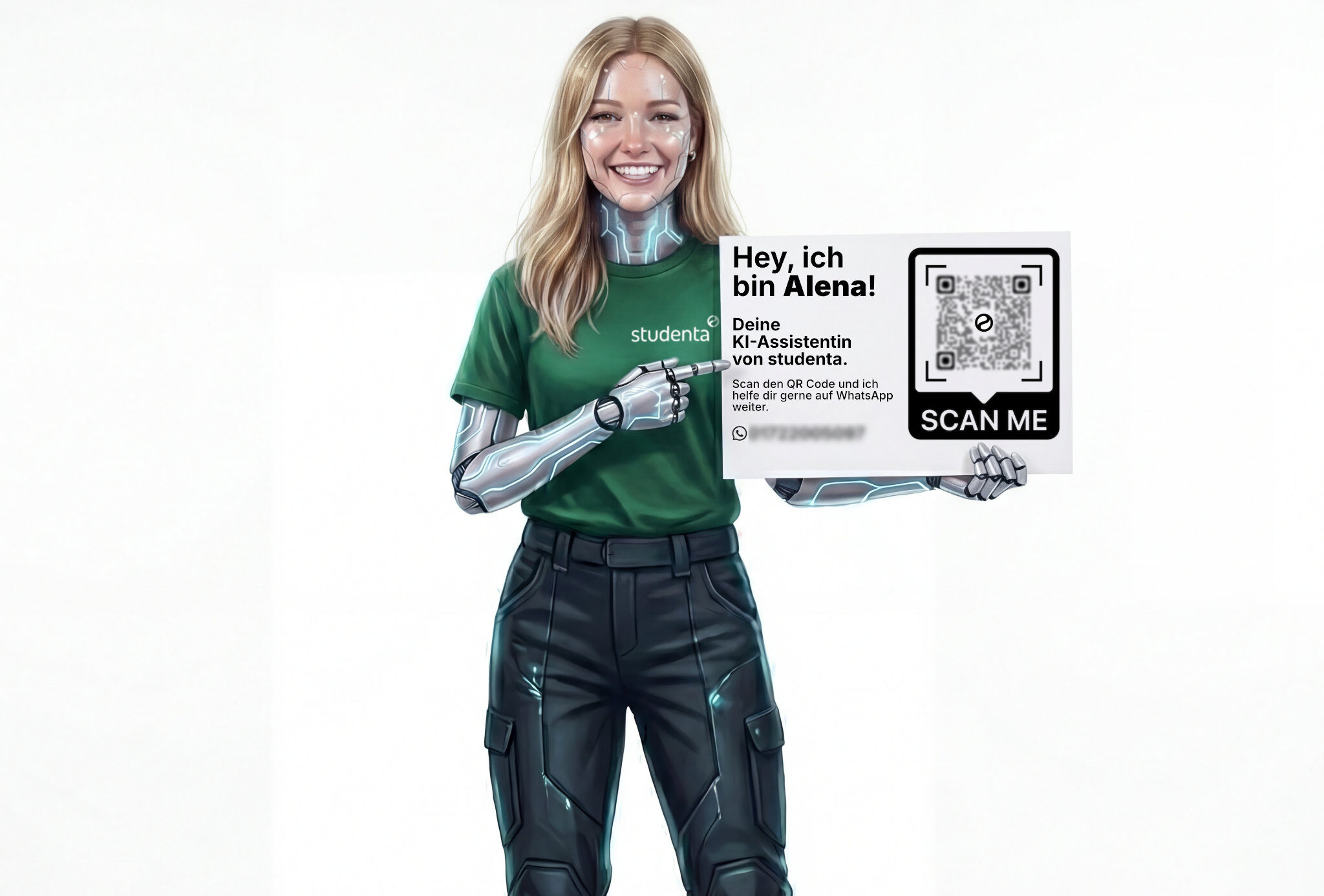
    The answer wasn’t to build a bigger boat or to shout louder. The answer was to build a silent reef beneath the surface—an intelligent, automated system that could absorb the energy of the waves and create a calm harbor behind it. We call her Alena.

    Alena is not a flashy, conversational AI designed to impress. She is a purpose-built AI assistant, a piece of quiet infrastructure created for one reason: to remove the administrative burden from Lena and her HR team. She is the silent assistant working below the surface.

    The Architecture: Building the Reef

    Her workflow is designed for clarity and reliability, a system of interlocking parts that turns chaotic energy into clean, actionable data.

    • The Outer Edge (Intake): It starts on WhatsApp or a simple web form. This is where an applicant first makes contact, sending their CV as a PDF. The first point of order is a check for a certificate of matriculation. It’s a simple, binary gatekeeper.
    • The Lagoon (Staging): Once through the gate, the PDF is moved to a dedicated Google Drive. It’s automatically renamed using a strict Nachname_Vorname_Lebenslauf convention. This simple act is the beginning of creating order. From there, an AI agent reads the document, extracting the key data points—name, contact info, profile summary—and populates a structured Google Sheet. This is our calm lagoon, a staging area where data is organized before it’s presented to the team.
    • The Bedrock (The Source of Truth): A crucial principle of any system is a single source of truth. For studenta, that bedrock is Papershift, their primary HR tool. Alena never writes directly to it. Instead, the Google Sheet serves as a review dashboard. A human team member—Lena or someone from her team—validates the entry and manually sets the status to “Aktiv.” Only then, with human approval, is the clean data automatically exported to Papershift. This human-in-the-loop design prevents data pollution and ensures the core system remains pristine.

    The Quiet Breakthrough

    There’s always a moment of tension when a new system goes live. The first time we watched the flow, we weren’t looking for a celebration. We were watching for leaks, for failures. The breakthrough came not with a bang, but with a quiet sense of satisfaction. We watched application after application flow seamlessly from a WhatsApp message into a perfectly formatted, human-verified entry in Papershift, all without a single manual keystroke from the team.

    The real beauty was watching the AI handle the sheer variety of human-made CVs—the strange fonts, the creative layouts. The system didn’t break; it simply, calmly, did its job.

    The Next Set: Expanding the Reef

    This is just the beginning. The reef is designed to grow. We’re already planning the next additions: automating routine onboarding tasks and developing an internal version of Alena to act as a secure knowledge base for existing employees.

    The journey that started with a walk through Münster wasn’t about marketing or hype. It was about seeing a system under strain and using technology not to add more noise, but to create calm. By building a silent, reliable assistant, we gave the studenta team their most valuable resource back: their time. Time to focus on the human work that truly fulfills their mission of improving student life.

  • The Münster Current: How a Rebrand Created a Wave (Part 1)

    The Münster Current: How a Rebrand Created a Wave (Part 1)

    Published: 2026-01-15

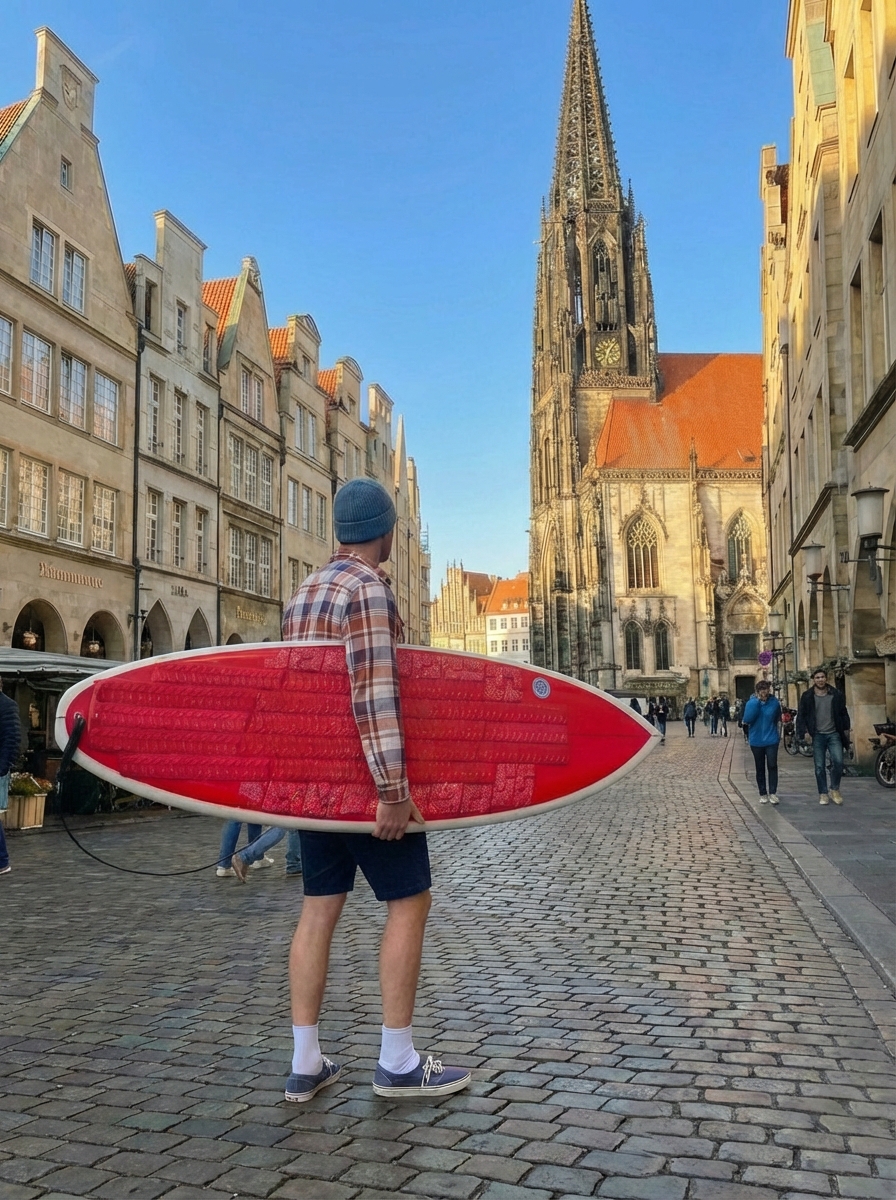
    The walk from the central station in Münster is a strange kind of time travel. It was late summer 2025. The air was thick with the familiar warmth of my hometown, a feeling as deeply ingrained as the muscle memory of paddling for a wave. I’ve spent years in Portugal, my days governed by the Atlantic’s rhythm—reading the currents, predicting the sets, feeling the subtle shifts in energy that tell you what’s coming. Walking here, on these old stones, felt like coming home, but I couldn’t turn off that part of my brain. I was reading the city’s currents, the flow of people, the energy of a place both ancient and buzzing with student life.

    I was on my way to meet Stefan Muckermann. The official agenda was “content strategy and social media” for his company, studenta. But I’ve learned that projects like this are never just about content. They’re about the entire system, the hidden currents that dictate flow.

    Our initial conversations were about just that. Before we could talk about what to post, we had to understand the core of the studenta brand. Their mission was simple and powerful: improve university life. But the expression of that mission had become diffuse. So, the first project wasn’t just a marketing campaign; it was a complete revisioning of their digital presence. We weren’t just building a new surfboard; we were shaping a new one from the foam up.

    We started by creating a comprehensive brand book, giving studenta a clear, unified voice. This became our North Star. With that defined, we built a new website on WordPress (studenta.de), a stable platform to serve as their central hub, publishing regular, valuable content.

    Then we turned to the social channels. We launched a new Instagram account, and the response was immediate and immense. It was like paddling into the perfect position and catching a clean, powerful wave. The follower count exploded into the thousands. We captured their energy, and they gave it right back. We also secured their brand on all other relevant social media channels, placing calm, confident placeholders for the future.

    The project was a success.

    The channels were built.

    The flow was established.

    And that created a new, much better problem.

    The wave we’d caught was now roaring. The new website, the thriving Instagram, the clear voice—it all worked. It worked so well that it was overwhelming the human team behind it. Lena and her HR crew were now facing a flood of dozens job applications a day. The system designed to help students was being submerged by the very interest it had generated.

    The success of the first project had revealed a deeper need. The conversation naturally shifted. We had figured out how to speak to the students of Münster. Now, we had to figure out how to listen to them, at scale.

    This is where the next swell begins. It’s a story not just about managing flow, but about building a silent, intelligent reef beneath the surface to handle the power of the waves.

    It’s the story of Alena.

    ![](https://blog.surfstyk.com/wp-content/uploads/2026/01/Generated-Image-December-03-2025-11_31AM-300×300.jpeg)

    (To be continued in Part 2)

  • From smokey Sparks to Superposition – Part 2

    From smokey Sparks to Superposition – Part 2

    Published: 2025-11-25

    The Quantum Mindset For Today’s World

    Quantum computing is not just a technological shift.It is a shift in how we think.It challenges everything that the classical computer era made us comfortable with.

    Classical thinking is linear.Step by step.Cause and effect.Zero or one.

    Quantum thinking lives in possibilities.Probabilities.Superpositions.Entanglements.Outcomes that only become real once they are observed.

    This is not only a science story.It is a life story.

    Because the world we live in today is no longer classical either.It is complex.Fast moving.Interconnected.Ambiguous.Full of overlapping realities and unpredictable turns.

    This is why quantum computing matters far beyond physics.

    It teaches us how to think in a world that no longer behaves like a tidy circuit board.

    Superposition as a skill

    ![](https://blog.surfstyk.com/wp-content/uploads/2025/11/Generated-Image-November-25-2025-10_58AM-1024×559.jpeg)

    A qubit can exist in multiple states at once.That sounds abstract until you realize that we are all dealing with superpositions all the time.

    Choices are not linear anymore.Paths overlap.Career, family, goals, identity, projects, opportunities.We live in multiple potential futures simultaneously.Quantum thinking helps us stay open long enough to see which one collapses into the right path.

    Entanglement as a reality of modern life

    Qubits can become entangled.A change in one instantly influences the other.It does not matter how far apart they are.

    Human systems work the same way now.A small shift in one part of the world can immediately reshape another.Economy. Energy. Technology. Culture.Everything is connected.Nothing moves alone.

    Understanding entanglement helps us make better decisions in complex environments.

    Interference as strategy

    Quantum algorithms use interference to amplify the right answers and cancel the wrong ones.

    We do this too.We try.We fail.We learn.We try again.Each iteration strengthens the signal of what works and reduces the noise of what does not.

    This is the same mechanism behind every effective business strategy.And behind every good life strategy.

    Quantum computers are not replacing classical computers

    This is important.Quantum computing is not the future of everyday laptops.It is the future of very specific problems that are too complex for classical machines.

    Simulating molecules.Optimizing global logistics.Breaking certain types of encryption.Discovering new materials.Modeling complex financial systems.

    They are specialized tools for the hardest problems humanity faces.

    And this challenges us in a beautiful way.

    Because it reminds us that for most things in life, the classical approach is still perfect.But for the unsolved, the deeply complex, the impossible, we now have something new.

    Why this matters to me now

    When I look back at that eight year old boy sitting on the carpet in front of the TV, I see the same curiosity that drives me today.The same desire to understand.To explore.To build systems that make sense.To help others navigate complexity without panic.

    Surfstyk grew out of that mindset.The calm.The clarity.The willingness to step into unfamiliar territory and say:“Let’s figure out how this really works.”

    Quantum computing is the next frontier on that path.Not because I want to become a quantum engineer.But because quantum thinking expands how I see the world.How I help clients.How I design systems.How I solve problems.How I understand complexity.

    And maybe that is the real point of this entire journey.

    Technology evolves.Industries evolve.The world evolves.

    But curiosity stays the same.Wonder stays the same.That quiet spark inside stays the same.

    The boy on the carpet is still here.Watching the experiment.Eyes wide open.Thinking:

    “This is going to be interesting.”

  • From smokey Sparks to Superposition – Part 1

    From smokey Sparks to Superposition – Part 1

    Published: 2025-11-13

    How a Childhood Moment Led Me to the Edge of Quantum Computing

    Münster, Germany 1986. It is a quiet autumn Sunday evening in our living room.The lights are dim, the air still holds a hint of dinner, and outside the window the sky is already dark. I sit on the carpet right in front of the television, legs crossed, hands on my knees. I am eight years old and absolutely still.

    On the screen there is a science show called “Knoff Hoff”.Two hosts.Joachim Bublath and Ramona Leiß.A crowd behind them watching closely as they prepare another experiment.There is a metal plate on the table and a thin cloud of smoke curling upward. Everything feels like it is on the edge of something surprising.

    My father sits on the couch behind me.He leans forward slightly, elbows on his knees, the way he always does when he is curious.He says quietly:“You might want to pay attention now. This one looks interesting.”

    I love when he says things like that.It makes the whole room feel like a secret is about to be revealed.

    The host smiles toward the camera, puts his hand over the setup and says in German:“Und jetzt passiert etwas, das man nicht glauben würde.”Now something will happen that you would not believe if you did not see it.

    My eight year old brain fires up like a sparkler.I think:“I have no idea what this is, but I want to understand it.”

    There is a moment of suspended silence.Then something pops.Or flashes.Or jumps across the table.I do not remember the exact experiment.What I remember is the feeling inside me, as if someone had opened a door in my mind I did not know existed.

    My body leans closer to the screen without me noticing.My father smiles and says:“Everything has a cause. If you understand the cause, you understand the world.”

    My thought at that exact moment:“So this is how the world works.”A simple thought, but it landed deep.This was the first time I felt that curiosity could be a compass.

    Am Anfang war der Wasserstoff

    A few years later I discovered a book on one of our shelves.It was Hoimar von Ditfurth’s “Am Anfang war der Wasserstoff”.Even the title felt like a secret.I remember running my fingers across the letters and thinking:“This sounds like the manual for the entire universe.”

    I understood maybe ten percent of it.But I read it anyway.Slowly. Stubbornly.The parts I did grasp made the world feel bigger and stranger.Not frightening.Just full of hidden structure and invisible rules waiting to be discovered.

    Looking back, this book planted two beliefs in me.

    The world is far stranger than it appears.And we can learn to understand it.

    Those two thoughts became the backbone of my life.

    From Hydrogen to Computers

    Fast forward.I sit in front of my first computer.A Apple Mac machine.A humming monitor.A keyboard that sounds like someone breaking dry twigs.

    I type my first lines of code and watch the screen respond.There it is again.That warm tightness in the chest.The feeling of something invisible suddenly becoming visible.The same sensation I had during those TV experiments.

    Computers felt like physics translated into logic.Predictable.Structured.Understandable.In a world full of uncertainty this clarity came as a relief.

    Bits were either zero or one.On or off.True or false.Clean borders. Clear rules.

    So I kept going.Computers grew into coding, automation, systems, architecture.All the way into my later work and eventually into Surfstyk.Every step felt like an extension of that original curiosity.That quiet question inside me.“How does this really work.”

    And Then The World Got Strange Again

    And now we are here.In a time when a new type of computing is beginning to emerge.One that does not follow the clean borders of zero and one.

    Quantum computing.

    Suddenly a bit can be zero and one simultaneously.

    ![](https://blog.surfstyk.com/wp-content/uploads/2025/11/image-1-687×1024.png)

    Like a coin spinning in the air.Not heads.Not tails.Both.And only when you measure it does it collapse into a single outcome.

    For eight year old me this would have sounded like pure magic.Even now it feels like someone placed another experiment on the table and said:“Watch closely. You won’t believe this if you do not see it.”

    Quantum computers do not check one possibility at a time.They explore many at once.Three qubits can represent eight states simultaneously.Fifty qubits can represent more states than there are grains of sand on Earth.Three hundred qubits can represent more states than there are atoms in the universe.

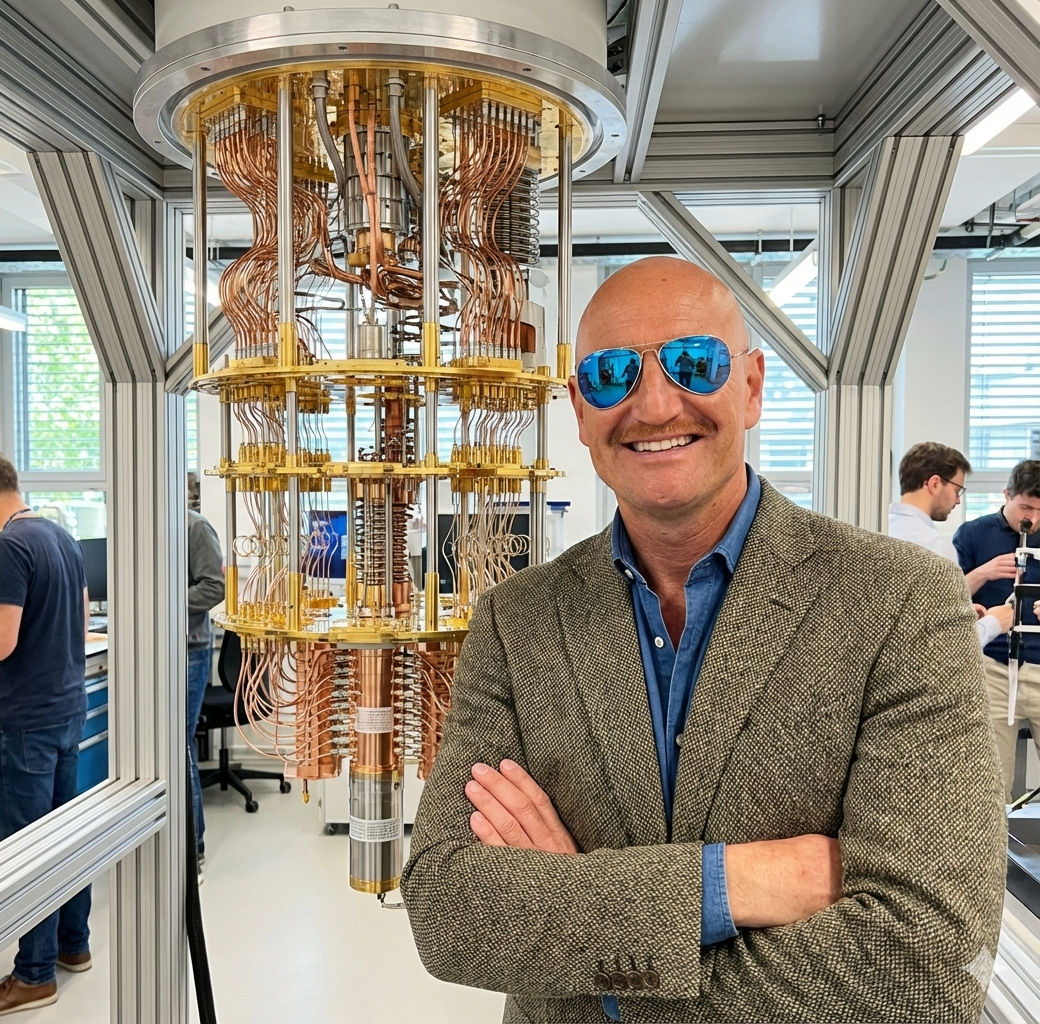
    And yet they are fragile.Delicate.Held inside gigantic refrigerators close to absolute zero.Surrounded by layers of control systems.Cooling hardware.Lasers.Microwaves.A classical computer sitting on top like a conductor guiding an orchestra of probabilities.

    It looks absurd.But the principle behind it is familiar.

    The world is stranger than it looks.And we can learn to understand it.

    This is the same realization I had on that carpet in front of the TV.The same spark.The same sense of wonder.

    And that is what brings us to Part 2… .

  • How I Built the Simplest WordPress Membership Plugin (and Why I Had To)

    How I Built the Simplest WordPress Membership Plugin (and Why I Had To)

    Published: 2025-08-04

    🌙 How a Quiet Night in Ericeira Led Me to Build My Own WordPress Membership Plugin

    Ericeira, Portugal. A Tuesday night in June 2025.

    The house was finally quiet.

    Dishes done, son asleep, dog curled up by the door. My wife had just turned in for the night. I was still at my desk — lights dimmed, ocean breeze drifting in through the cracked window, the last sips of lukewarm tea within reach.

    On the screen: my CRM knowledge base.

    A structured vault of insight — systems I’d built, frameworks I’d tested, vendor stacks I’d mapped out over months of deep work. I was proud of it. It wasn’t pretty, but it was useful. And it had quietly become one of the most valuable things I owned.

    “I should share this,” I thought.“But not with everyone.”

    I didn’t want it on LinkedIn. Not in a newsletter blast. I wanted it for my circle — my clients, peers, and the curious few who think the way I do. The ones who’d actually use it.

    That’s when I said the fateful words:

    “I just need a membership plugin. A simple one.”

    Ha. Yeah.

    “WordPress will handle this, right?”

    Naturally, I turned to WordPress. I’ve used it since forever. It’s home turf. I figured I’d just enable registrations, protect a few pages, maybe style a form or two. Done by midnight.

    But the reality?

    The registration feature is disabled by default. Fair enough — security. But even when enabled, the out-of-the-box experience is clunky at best and cursed at worst. The styling was a disaster. The flows were unintuitive. Even after some CSS and duct tape, it still felt like I was building an onboarding experience in 2009.

    “Okay. Plugins. Let’s find one that just… works.”

    I went plugin diving.

    There were plenty. In fact, too many. Most were impressive. But they all seemed to want one thing: control. They came bundled with Stripe integration, multi-tier access levels, dashboards, analytics, invoices, maybe a smoothie machine.

    They promised simplicity — but to me, they felt bloated, sales-driven, and way over-engineered for what I needed.

    I didn’t want a membership platform.

    I wanted a gate.

    So I built it. The hard way — but the right way.

    If something doesn’t exist, and you can’t duct tape it together… well, you build it.

    Problem: I’m not a full-time coder anymore. I started that way, years ago. But my JavaScript is rusty, my PHP gets second-guessed, and my time — between running projects and being a dad — is scarce.

    But then there’s AI.

    I started prototyping with ChatGPT and Claude. The first versions were… entertaining. And frustrating. If you get the prompt wrong, you get a weird Frankenstein plugin that doesn’t even activate. Fixing those dead-end outputs takes more time than starting over.

    Still, I kept going.

    I wanted something elegant, and clean, and conversion-focused. Something I’d actually be happy to run on my own site.

    So I went old-school. Opened up VS Code. Fired up Local. Sketched out the logic. Prompted GPT like a boss. And line by line, I started building.

    Introducing: Surfstyk Simplest Membership

    It’s exactly what the name says.

    A lightweight, native WordPress plugin that lets you protect content, blur what’s behind it, and give users a seamless way to sign up and get in — using a magic link.

    🛠️ The core features:

    • Teaser content: Show the first section of a protected post or page.
    • Blurring effect: Visually block the rest with a stylish transparent overlay and gradient fade.
    • Simple sign-up form: Just nickname, email, and a checkbox.
    • Magic link login: No passwords. Just one secure click from an email.
    • Instant unlock: They’re verified, logged in, and redirected — all in one clean flow.

    It’s secure. It’s clean. And it works with everything:

    • Pages, posts, custom post types
    • Custom fields
    • Pages rendered in React, Elementor, anything

    Even better: the overlay is completely isolated from the content. No DOM collisions. No style interference. Your content stays yours. My plugin just floats above it like a well-behaved guest.

    Why This Matters to Me

    I wasn’t trying to build the next “membership empire” plugin. I wasn’t optimizing for scale. I just wanted something that worked — for me, and people like me.

    I needed:

    • A gate that doesn’t kill the user experience
    • A sign-up that doesn’t require a new password
    • A flow that feels like it belongs in 2025, not 2012

    The end result is something I’m genuinely proud of. It’s minimal. It’s frictionless. It feels good to use. And it respects the principles I care about:

    • Simplicity
    • Data ownership
    • Clean onboarding
    • Zero distractions

    What’s Next?

    Right now, I’m running Surfstyk Simplest Membership on my own site to protect CRM content — and it works beautifully.

    I’m thinking about releasing it publicly. If I find the time (and maybe a few plugin veterans who’ve done this before), I’d love to get it into the WordPress Plugin Directory.

    If that’s your world — ping me.If you want to use it — let’s talk.If you just want to peek — go check it out here.

    Final Thoughts

    There’s something special about building for yourself.

    You make better decisions. You’re not distracted by trends. You care more about what it feels like at 11pm when your brain’s tired but the idea is still burning.

    This plugin wasn’t built with VC funding or a launch strategy.It was built with the door slightly open, the ocean air rolling in, and the quiet conviction that something simple can still be powerful.

    Thanks for reading.

  • From Pierogi to Pipelines: How We Rebuilt Marketing, Branding & CRM at Warsaw Dynamics

    From Pierogi to Pipelines: How We Rebuilt Marketing, Branding & CRM at Warsaw Dynamics

    Published: 2025-07-21

    #

    It started with pierogi.

    Summer 2023. I had just landed in Warsaw to meet the two founders of Warsaw Dynamics — Krzysztof and Kamil — in person for the first time. We sat down at a local Polish restaurant. The kind with mismatched tablecloths and the smell of dill and smoked sausage hanging in the air. Kamil debated between gołąbki and żurek. I went straight for pierogi ruskie.

    Between bites, we talked shop.

    They told me about their plugins — highly rated, rock-solid additions to the Atlassian ecosystem. My personal favorite was “External Share,” a beautifully simple tool that lets you share Jira or Confluence content with people outside your workspace. It was solving a real problem, and it was making money.

    But underneath that success was a quiet bottleneck: no marketing team, no CRM system, no real way to nurture all the incoming trials.

    “We’re getting hundreds of users trying the product,” they said, “but we have no real process to support them.”

    No brand voice. No automation. No structure. Just great code — and a growing business that was starting to feel the pain of not following up.

    The Starting Point: Solid Product, Silent Funnel

    At that time, Warsaw Dynamics was already doing over $100K per month through Atlassian. That’s a great place to be. But when you looked closer, most of that revenue came in despite the lack of customer engagement.

    There was no social media presence, no onboarding sequences, no insights into who was trialing their products. And most of all — no system in place to prioritize leads or communicate value once the trial clock started ticking.

    We started small. Built the brand. Defined their voice. Set up a few basic outbound flows and gave the visual identity a light refresh. Within a few weeks, the lights started to come back on. People were responding to the brand again — because it finally had a pulse.

    But the real turning point came when we turned our attention to their CRM.

    Building the Brain: Why Zoho Was the Right Fit

    There was already a Zoho CRM instance floating around, mostly dormant. After reviewing options like HubSpot or building something custom, we decided to lean into what was already there — and give it a proper brain.

    It wasn’t always pretty. Zoho’s UI still has some turn-of-the-millennium vibes. But when you want raw flexibility, especially for a dev-savvy team, it’s a brilliant canvas. And that’s exactly what we needed.

    From Trials to Triage: Building the CRM That Thinks

    Over the next 18 months, we transformed that half-configured Zoho instance into a highly adaptive, revenue-aware system. Here’s what we built, layer by layer:

    🔁 Automated Data Ingestion & Enrichment

    • Hourly import of trial data via Atlassian API
    • Included: app name, hosting type (cloud vs. data center), user count, license type
    • Enriched with: employee count (via LinkedIn/Wiki), estimated revenue, and lead quality scoring

    📥 Lead Handling Logic

    • All new entries land in the Leads module
    • Cloud-hosted leads auto-convert into Deal + Contact + Account
    • Server/DC and event leads handled via manual “Mass Convert” for safe triage
    • Support for CSV imports from events, meetups, partner uploads

    📊 Deal Pipelines (Clear, Segmented, Actionable)

    • Direct Sales: auto-fed from cloud trials
    • Partner Sales: filtered by known partner resellers
    • Manual Conversion: everything else, waiting for human eyes
    • Probability-driven expected revenue tracking tied to deal stage

    ✉️ Automated Email Sequences

    • Smart sequences by app and hosting type (0, 4, 8, 24 days)
    • First touch (“Email Zero”) designed to get past spam filters
    • Lightweight HTML and contextual content, with tracked open rates and template versions

    👥 Governance & Roles

    • One superadmin (Krzysztof), one system owner (me, later Tomasz)
    • Jamale handling daily sales ops
    • No staging environment — so we enforced single-point change control

    📆 Daily Workflows & Pipeline Monitoring

    • Manual review of high-value trials
    • Slack-based alerts with screenshots
    • CRM exports for cross-referencing with Atlassian backend

    And Then… The Revenue Started Climbing

    When I first joined in summer 2023, monthly revenue was hovering around the 100K mark. But then things started to shift — slowly at first, then sharply.

    You can see it in the chart below.

    ![](https://blog.surfstyk.com/wp-content/uploads/2025/07/image-1024×512.png)

    This graph shows estimated monthly revenue paid by customers through Atlassian, broken down by:

    • Cloud monthly (light blue)
    • Cloud annually (mint green)
    • Data center (pink)

    From the moment we got the CRM humming — and combined it with structured outbound messaging, better partner handling, and lead tagging — things moved.

    Steady growth through late 2023. A jump in Q1 2024 as pipeline visibility improved. Another step-change in mid-2024 when we fully activated automation and began handling partner leads more aggressively.

    By April 2025, just as my engagement ended, monthly revenue had nearly tripled. That wasn’t a fluke — it was the result of building the right foundation, then letting it compound.

    What I Learned — and What Others Can Steal

    This project reminded me of something simple: great products don’t scale on their own. Even in developer-first ecosystems like Atlassian, communication matters. Context matters. Follow-up really matters.

    We didn’t run big paid campaigns. We didn’t overcomplicate things. We just put structure in place:

    • So the sales team knew who to talk to
    • So every trial user got the info they needed — without being chased manually
    • So partners got a clean handoff and visibility
    • So the founders could finally see what was happening in their own funnel

    And that made all the difference.

    Final Thoughts

    The engagement was supposed to last six months. It turned into eighteen.

    Not because we kept adding scope — but because we kept seeing results. And when things are working, you keep going.

    I’m proud of what we built together. A brand, a system, a structure that made sense — and that scaled. Warsaw Dynamics has a strong team and even stronger products. Now, they also have the backbone to support serious growth.

    And to think… it all started over a plate of pierogi.

  • TYPO3, WordPress, and a Morning by the Sea

    TYPO3, WordPress, and a Morning by the Sea

    Published: 2025-07-15

    ☕️ TYPO3, WordPress, and a Morning by the Sea

    The window is open. Seagulls are shouting over Praia do Matadouro, the ocean rhythm humming underneath it all. I take a sip of coffee — still hot, still quiet — and let my eyes rest on the horizon.

    It’s early. The kind of early where the sun is just starting to do its job, and the light is spilling across my desk in soft gold. A new tab opens. I’m checking a few websites for a client, like I do many mornings — quick source code scan, structure check, see what’s under the surface.

    Mostly WordPress. Always WordPress.

    But then I pause.

    This website is powered by TYPO3 – inspiring people to share!

    Wait a second. Is that… TYPO3?

    I lean in, frown a little, and squint at the headers.

    Yep. TYPO3. That takes me back.

    A sudden rabbit hole

    I don’t normally go down technical rabbit holes before 9 AM. But this one feels personal.

    I start digging — not out of skepticism, but curiosity. I’ve built, scaled, and helped sunset plenty of CMS systems over the years. And while TYPO3 and I have crossed paths before, it’s been a while.

    I open my dashboard notes, start running a quick comparison. What’s TYPO3 up to in 2025? Is it worth considering? And how does it hold up against my go-to workhorse, WordPress?

    The market doesn’t lie

    The numbers say it all:

    • WordPress powers over 43% of the entire internet.
    • TYPO3? Around 0.6% and mostly in German-speaking enterprise circles.

    At this point, I mumble something like:

    “Okay… maybe there’s a reason I don’t run into this very often.”

    But I don’t want to dismiss it too quickly. So I pull up the data, and it turns into this neat little table:

    Aspect*WordPress*TYPO3Market Share43%+ of all websites worldwide~0.6%, strong in Germany, Enterprise marketsEase of UseBeginner-friendly block editor, drag & drop, real-time previewSteep learning curve, developer-centric interfaceExtensions60,000+ plugins and themes6,000+ extensions, fewer integrationsPerformanceGreat up to medium scale; needs tuning for enterpriseBuilt for complex, high-scale environmentsSecuritySecure if maintained; high attack surface due to popularityMore secure out of the box; enterprise-grade controlsSEOExcellent with Yoast & others Very strong technical SEO built-inCost to DevelopLower – wide talent pool, lots of freelancersHigher – specialized developer skill requiredCommunityMassive, global, vibrant (WordCamps, forums, etc.)Smaller but passionate; focused around TYPO3 AssociationWho it’s forBloggers, small businesses, e-commerce, creatorsCorporates, governments, multilingual portals, regulated environments

    The honest verdict

    So here’s the thing: TYPO3 isn’t bad. It’s focused. It’s opinionated. It serves enterprise environments well — and if you have a German government project or a multinational portal with strict workflows, it might even be the right call.

    But for most real-world projects I work on — fast-moving, pragmatic, scaling from solopreneur to small team to mid-sized business — WordPress wins. Every time.

    And it’s not just about the numbers.

    It’s about how it feels to build with it. How fast you can launch. How easy it is to hand off. How your marketing team won’t hate you for choosing it.

    Zooming back out

    I glance back at the window. The ocean’s picking up. Light’s brighter now. The coffee’s cooling in my hand.

    And I think:

    “Yeah, WordPress just makes sense. It gets out of the way. It lets you ship.”

    For someone like me — a fractional tech strategist who lives in that sweet spot between strategy and shipping — that matters. A lot.

    I don’t need elegance for elegance’s sake. I need momentum. WordPress gives me that.

    If you’re on the fence…

    If you’re evaluating your next CMS stack — maybe you’re in that classic in-between moment of rebranding, launching, rebuilding — don’t overthink it. Start with WordPress. There’s a reason it keeps winning.

    And if you’re knee-deep in legacy systems or evaluating “enterprise-grade” options that feel like overkill? Let’s talk. I’ve been in those rooms. I’ve made those migrations. I know the signs.

    That morning, over coffee and a glimpse into someone else’s codebase, I was reminded why I keep coming back to WordPress.

    Not because it’s flashy.

    But because it works.

    And if you work in the real world — with real clients, real budgets, real deadlines — that’s exactly what you need.