Category: Blog

  • Decoding the Fireside Chat with Mary Hubbard and Matt Mullenweg: What They Really Said

    Decoding the Fireside Chat with Mary Hubbard and Matt Mullenweg: What They Really Said

    Published: 2025-06-12

    The WordPress leadership fireside chat at WordCamp Europe delivered more strategic information in one hour than months of official communications. For organizations building on WordPress, understanding these signals matters for planning and positioning over the next three years.

    Reading Between the Lines: The Analytical Framework

    Leadership communications at this level serve multiple purposes simultaneously: information distribution, strategic positioning, and expectation management. As someone who helps teams navigate technology transformations where CRM is a mindset, I recognize when leaders are managing multiple stakeholder groups through careful messaging.

    This conversation revealed significant strategic shifts that won’t appear in press releases but will shape WordPress development priorities, community dynamics, and business opportunities.

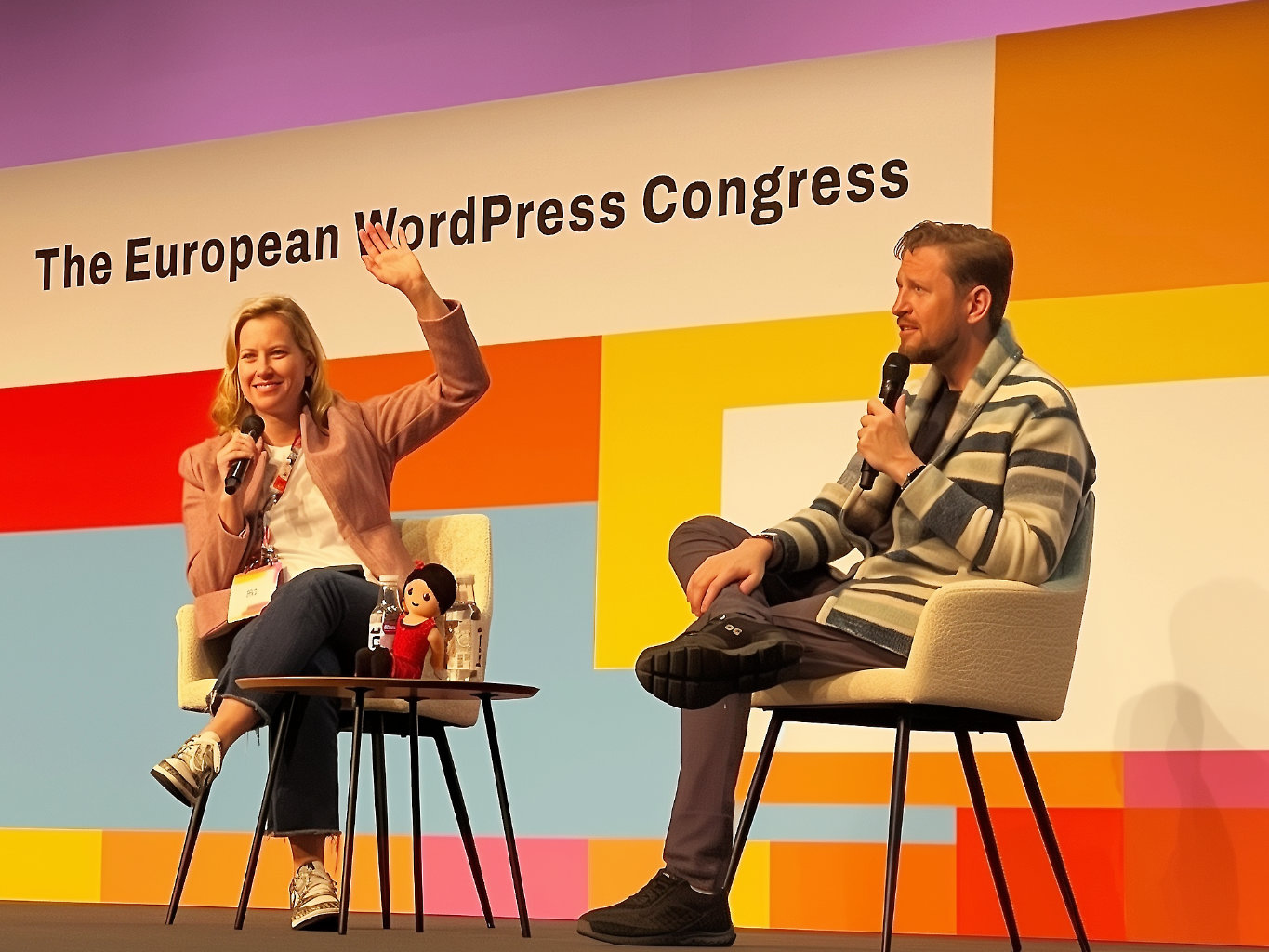
    But leadership analysis isn’t just about words—it’s about behavior. While fancy bottled water sat untouched by Mary on stage, she got up mid-conversation and walked to the catering area to get herself plain water in a regular cup. This wasn’t about hydration; it was about authenticity. In an era where executive leadership often feels performative, Mary’s choice to prioritize substance over staging revealed something fundamental about her approach to the role. She’s willing to disrupt formality for practicality—a leadership trait that suggests she’ll prioritize operational effectiveness over organizational ceremony.

    The Direct Messages

    WordPress leadership made several clear strategic statements:

    AI Integration Priority: Matt outlined specific areas for AI implementation across WordPress interfaces, with particular emphasis on development automation, content creation, and administrative efficiency. This represents committed development resources, not experimental features.

    Community Sustainability: The Campus Connect program expansion to 5,000 university students with mandatory contribution requirements signals a systematic approach to contributor pipeline development. This addresses WordPress’s aging contributor base through institutional partnerships rather than individual recruitment.

    Performance Infrastructure: The plugin directory statistics—72,000 plugins, 630 billion requests, 17.5 billion downloads—were positioned as competitive differentiators. These numbers establish WordPress’s scale advantage in ecosystem discussions.

    Strategic Positioning Revealed

    Beyond direct statements, several strategic positions emerged through response patterns and language choices:

    Accountability Over Activity

    I think we made a classic mistake… we were measuring input not output.

    – Matt

    Matt’s critique of “measuring input not output” in Five for the Future indicates a fundamental shift toward ROI-based contribution evaluation. Organizations sponsoring WordPress contributors should expect metrics-based reporting requirements and result-oriented project assignments.

    Mary’s emphasis on “impact” measurement and data collection through tools like Baturja confirms this direction. The community-contribution model is professionalizing.

    Centralized Control Response

    The Project Fair discussion revealed WordPress’s defensive positioning around ecosystem fragmentation. Matt’s emphasis on supply chain security, unified analytics, and centralized trust mechanisms indicates increased protective measures around the plugin directory.

    This suggests WordPress views distributed plugin repositories as competitive threats rather than collaborative opportunities. Expect strengthened barriers to plugin ecosystem fragmentation.

    Educational Infrastructure Investment

    The Campus Connect university partnership represents long-term workforce development strategy. By embedding WordPress skills in formal education curricula, WordPress creates sustainable competitive advantage that other platforms cannot easily replicate.

    This moves beyond community building into market development through educational institutions.

    Key Strategic Moments

    https://wordpress.tv/wp-content/uploads/2025/06/video-13b44e5373.mp4

    Early in the conversation, when Mary discussed the sustainability team dissolution, her language shifted from diplomatic to directive. Her statement about “embedding sustainability throughout the project” rather than maintaining a dedicated team revealed WordPress’s broader strategy of eliminating single-purpose advocacy groups that don’t produce measurable outcomes.

    The most revealing moment came during the Project Fair discussion when Matt responded with genuine surprise rather than diplomatic deflection. His choice of words—”worked on in secret for six months”—wasn’t prepared messaging; it was unfiltered reaction revealing WordPress leadership’s perception of competitive threats.

    During the Five for the Future discussion, Matt’s emphasis on “debating, arguing more about software and interfaces and code” represented direct critique of current community dynamics. The audience response—a noticeable energy shift—confirmed this message resonated as intended correction rather than inspirational rhetoric.

    Late in the Q&A session, during Courtney Robertson’s question about contributor metrics, Mary’s response about Baturja funding revealed the financial pressure behind community tooling decisions. When she said “I would love it to be funded by somebody else. Automatic currently funds it and it’s very expensive,” she was making a public funding request while maintaining transparency about resource constraints.

    During the WooCommerce competitive positioning discussion, Matt’s emphasis on data liberation and improved importers wasn’t just feature discussion—it was competitive strategy articulation designed for implementation planning against Shopify.

    In the final questions, when multiple contributors asked about team dissolution and resource allocation, the pattern of responses revealed WordPress’s shift from community accommodation to performance-based decision making.

    Operational Implications

    For Development Organizations

    The AI team formation and Matt’s emphasis on development automation tools signal significant productivity opportunities alongside displacement risks. Routine WordPress development tasks will increasingly become automated, requiring agencies to focus on higher-value strategic and customization work.

    Organizations should evaluate their service portfolios for automation vulnerability and identify differentiating capabilities that resist commoditization.

    For Plugin Developers

    WordPress’s protective stance around the plugin ecosystem means increased scrutiny in approval processes. The emphasis on security scanning, trust verification, and supply chain integrity indicates more rigorous review requirements.

    Plugin developers should prepare for longer approval cycles and enhanced security documentation requirements. Quality and compliance will become competitive advantages.

    For Enterprise Implementation

    Mary’s consistent reference to “business users” rather than “enterprise clients” confirms WordPress’s positioning strategy. The platform maintains its accessibility focus while adding business capabilities, rather than creating distinct enterprise tiers.

    This creates opportunities for implementation partners who can bridge WordPress’s community-oriented features with enterprise requirements.

    Timeline and Investment Priorities

    Based on resource allocation signals and development commitments:

    Near-term (6-12 months): Enhanced plugin security systems, Five for the Future accountability frameworks, AI interface integrations

    Medium-term (1-2 years): Campus Connect graduate integration, automated development tool deployment, competitive response to ecosystem alternatives

    Long-term (3+ years): Educational pipeline impact on contributor demographics, AI-driven development workflow transformation

    Strategic Recommendations

    For Organizations Using WordPress: Plan development roadmaps around increased AI integration and automated workflows. Evaluate current development processes for efficiency opportunities and competitive threats.

    For Service Providers: Assess service portfolios for automation vulnerability. Identify high-value capabilities that require human expertise and strategic thinking.

    For Contributors: Understand the shift toward measurable contribution outcomes. Focus on deliverable results rather than participation metrics.

    Business Intelligence Takeaways

    WordPress is transitioning from consensus-driven community management to performance-measured platform governance. This doesn’t abandon community principles but adds business discipline to community operations.

    The platform is simultaneously defending market position against ecosystem fragmentation while investing in long-term competitive advantages through educational partnerships and AI integration.

    For organizations building on WordPress, this represents both opportunity and requirement for strategic adaptation. The platform’s evolution demands corresponding evolution in how businesses approach WordPress implementation and development.

    CRM is a mindset and WordPress is applying systematic relationship management principles to community development, contributor engagement, and ecosystem control.

    You’ve come to the last part of a three-part series about the World Camp Europe 2025. Feel free to check out my raw take and the deep dive into key sessions.

  • WordPress Business is Not WordPress.com: Three Sessions That Revealed the Real Story

    WordPress Business is Not WordPress.com: Three Sessions That Revealed the Real Story

    Published: 2025-06-11

    I must have attended roughly 10+ sessions over the two days in Basel, and to be honest, my focus as a CRM nerd gravitates toward the business side of WordPress. While the technical sessions were impressive (Ryan Welcher is a legend), I found myself drawn to conversations about customer relationships, business models, and strategic positioning—areas where“CRM is a mindset”becomes essential for understanding WordPress’s evolution.

    Before diving into my analysis, I want to mention two sessions that were emotional in their own ways. The first was WordPress without Borders — The Fight for Digital Freedom by Noel Tock. The experiences he shared from the front line in Ukraine put everything we do in tech into perspective and made everyone more reflective.

    In quite the contrast, there was the session by Marieke van de Rakt, Jono Alderson, and Amber Hinds where they live-critiqued three websites—super insightful and genuinely entertaining to watch (Schadenfreude is real, sorry). They highlighted crucial technical details like excluding staging sites from search engine indexing (something many agencies miss) and demonstrated how to prepare websites for the European Accessibility Act (EAA) coming into effect on June 28, 2025—practical insights with immediate legal and SEO implications.

    But three sessions stood out for their strategic implications, revealing patterns that only became fully clear after hearing the leadership perspective during the fireside chat. A dedicated blog coming soon – Follow on X to be the fist to know.

    Session 1: Building Support as Core of Product

    Anna Hurko – Crocoblock

    Key Insight: Customer-centric businesses should let support lead the strategy

    Anna Hurko’s journey from Senior Technical Support Specialist to CEO at Crocoblock isn’t just an inspiring career story—it’s a masterclass in understanding that customer support is fundamentally a CRM function. Her presentation challenged the traditional support hierarchy with three rule-breaking principles:

    🔄 Support = Customers (not a cost center)🎯 No tiers = Everyone gives top-level support👥 Whole team ownership = Everyone is part of the support team

    What struck me wasn’t just the philosophy but the implementation. Crocoblock involves QAs, developers, project managers, product managers, community managers, copywriters, and video content creators in support. This isn’t about efficiency—it’s about relationship intelligence.

    From a CRM perspective, this approach creates unprecedented customer data flow throughout the organization. When your entire team interacts with customers across live chat, tickets, Zoom calls, GitHub issues, refunds, interviews, community platforms, and WordCamps, you’re not just providing support—you’re building a comprehensive customer relationship ecosystem.

    The audience questions revealed a common pain point: agencies struggling to scale personalized service. Anna’s model suggests the solution isn’t automation—it’s systematic human engagement.

    Let’s stop calling it “Support” and start recognizing it as what it really is: distributed customer relationship management, or better CRM is a Mindset.

    Session 2: WaaS for Agencies: Opportunities, Challenges & Pricing

    Sandra Kurze – GREYD

    Key Insight: Scale through systems thinking, not just resources

    Sandra Kurze presented Website as a Service (WaaS) as more than recurring revenue—it’s a fundamental business model shift toward standardization, scalability, and automation. But what initially appeared to be an agency-focused session revealed something much larger.

    The Reality Check: Traditional agency scaling means hiring more people for each project. WaaS means building systems that handle hundreds or thousands of sites with the same core team.

    The technical demonstrations showed how GREYD handles systems of hundreds of connected sites, but the real insight came through examples:

    • Mrs. Sporty franchise: 250 locations across Europe
    • Enterprise partner programs: Partners pay “marketing fees” for branded landing pages
    • Centralized control: Global updates with local customization capabilities

    The community reaction was telling. Questions focused heavily on pricing models and client retention, but missed the strategic implication: WaaS isn’t about selling websites—it’s about selling business systems.

    With a CRM mindset, WaaS represents a shift from project-based transactions to relationship-based subscriptions. The customer data, behavioral patterns, and business intelligence generated across these connected systems create competitive advantages that traditional one-off web projects simply cannot match.

    Sandra’s mention of small agencies handling thousand-site projects through scalable systems wasn’t just about operational efficiency—it was about data scale and relationship depth that rivals enterprise platforms.

    Session 3: What We Learned Building Site Kit

    Maria Moeva – Google

    Key Insight: Organize around customer questions, not internal capabilities

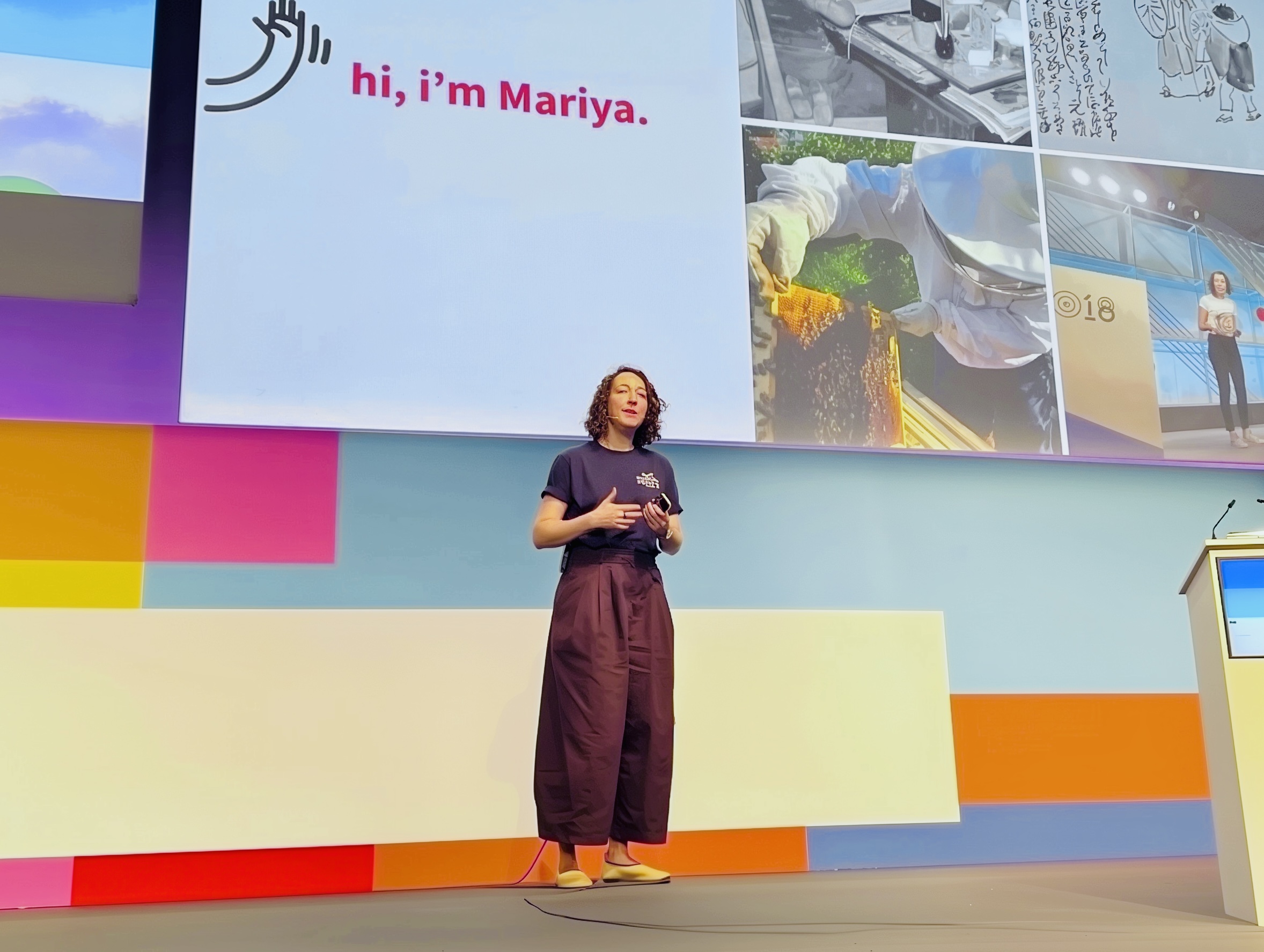
    Maria Moeva’s session on Google’s Site Kit plugin was surprisingly under-attended, which was unfortunate because it contained some of the most actionable strategic insights of the conference. Her 15-year journey at Google—from classical Japanese literature through beekeeping to product management—brought a unique perspective to making complex tools accessible.

    The Three Lessons from Site Kit:

    • Make complex tools accessible → Bridge the gap between power and usability
    • Translate data into action → Answer customer questions, don’t just show data
    • Show the whole story → Connect visitor behavior to business outcomes

    The most significant insight was organizational: Site Kit’s evolution from product-organized to question-organized dashboards. Instead of “Analytics section, Search Console section,” they pivoted to answering customer questions:

    • “Am I getting traffic?”
    • “Is my content performing well?”
    • “Is my site fast?”
    • “Am I making money?”

    This represents a fundamental shift from tool-centric to customer-centric thinking. CRM is a mindset means organizing around customer needs, not internal capabilities. Site Kit’s personalization feature—asking “What’s the purpose of your site?” and curating metrics accordingly—demonstrates how proper customer segmentation drives product decisions.

    Forward-looking implications: If Google is moving their WordPress integration toward question-based, personalized experiences, agencies and enterprises need to think beyond feature sets toward customer outcome optimization.

    (🐝 And yes, I would have loved to hear more about the beekeeping—managing 50,000-60,000 bees definitely provides unique perspectives on systems thinking!)

    The Pattern Recognition

    Three different rooms, three different topics, but one consistent message emerging about WordPress’s evolution: the business model is shifting from transactions to relationships.

    Anna’s support-as-product approach, Sandra’s WaaS systems thinking, and Maria’s customer-centric tool design all point toward the same strategic direction. WordPress isn’t just enabling websites—it’s becoming the infrastructure for customer relationship platforms.

    🔄 The Recurring Theme: Every session emphasized systematic customer engagement over one-off deliverables.

    ❓ The Missing Conversation: Nobody explicitly discussed how these approaches generate competitive customer intelligence, but that’s exactly what they do.

    🎯 The Competitive Response: While other platforms focus on features, WordPress is positioning around relationships and business outcomes.

    This pattern became crystal clear when I later analyzed Matt and Mary’s fireside chat, where strategic directions that weren’t publicly announced but were hinted at revealed the full scope of WordPress’s business evolution.

    The strategic direction hinted at in these sessions was confirmed—and expanded upon—during the fireside chat. But Matt and Mary’s conversation revealed implementation timelines and business implications that most attendees completely missed. Those insights explain exactly why the energy in that packed main hall might have felt different from previous WordCamps.

    Coming soon: Part 3 will dissect the Matt Mullenweg and Mary Hubbart fireside chat, revealing the strategic decisions shaping WordPress’s future that weren’t in the official announcements.

  • Inside WordCamp Europe 2025: A Tech Strategist’s Raw Take

    Inside WordCamp Europe 2025: A Tech Strategist’s Raw Take

    Published: 2025-06-09

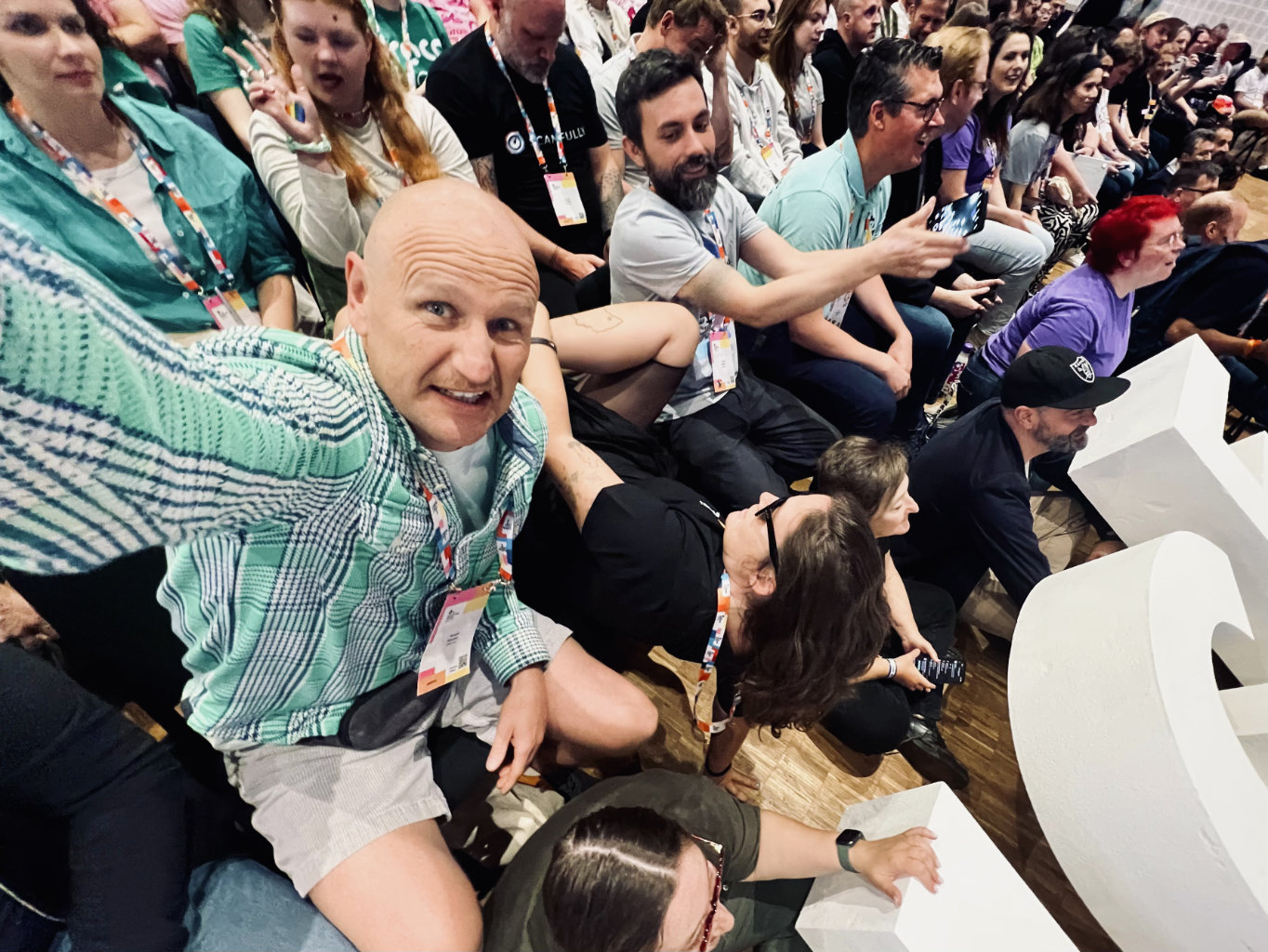
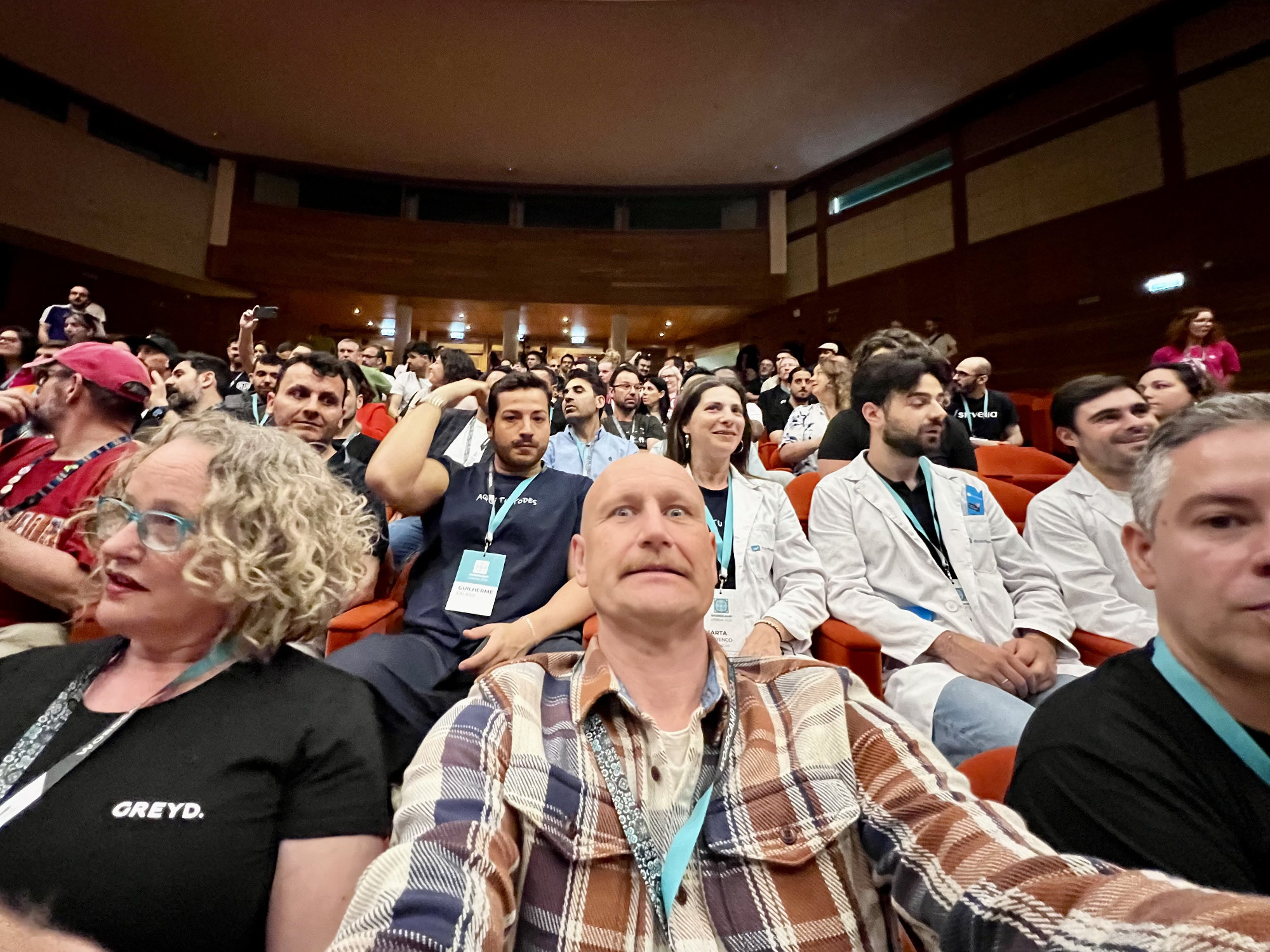
    Sitting in the front row at the fireside chat with Matt and Mary talking about the state of affairs of WordPress, I came across a term again that I haven’t read in a while:

    data liberation“.

    It perfectly reflects what I’ve been thinking and working on over the past few years. You have to own your content, you have to own your data, and be free with it to share it with the platform that you like.

    This isn’t only true for CRM systems that I’m focused on—it’s fundamental to how we should approach data and personal information online everywhere. This was a key moment across the three days, and I’m getting ahead of myself because there’s a lot more to unpack.

    From Spontaneous Discovery to Strategic Insight

    Four weeks ago, I didn’t even know about the WordPress community. Then, thanks to the WordPress dashboard (which needs some strong improvements, by the way—I agree with Matt on that one), I discovered WordCamp Lisbon and attended it spontaneously. That’s where I met the vibrant people of the community and learned about the event in Basel.

    Despite all odds, I booked the flight and attended without any time to build expectations. In this approach, you’ll find my honest impressions. Since there’s substantial ground to cover, I’m creating three parts: this raw take from the event, a deep dive into the sessions I strategically attended, and a detailed analysis of that revealing fireside chat with Matt and Mary.

    The Community Pulse: Alive and Evolving

    WordPress is alive and powering roughly 50% of the internet, with Google and Salesforce there as title sponsors. The vibe was vibrant—everyone discussing what’s genuinely interesting about WordPress, what they can accomplish with it, and expressing gratitude for what the platform offers. The hundreds of volunteers working on the event is a statement by itself. This volunteer-driven approach mirrors what I see in successful CRM implementations—community ownership drives better adoption than top-down mandates.

    The Elephant in the Room

    Of course, there were dark clouds—not only over Basel’s sky but within the community. I won’t dive into anything that’s in progress, but the launch of Project FAIR was something that surprised many and will definitely impact the path forward.

    What I took away was Matt’s statement: “A lot of great inventions in the WordPress community started with ‘we don’t like the way this is done. Let’s do our own thing.’” Then later, these innovations made it back into core. That’s a productive mindset, but the situation was definitely a discussion topic on and off stage.

    Three Moments That Shifted My Perspective

    1. The AI Team Formation

    I didn’t see many AI buzzwords across the booths and speeches, but AI was part of numerous conversations. The fact that WordPress is forming its own AI team proves this matters strategically. This reminds me of how forward-thinking organizations approach CRM—not chasing every trend, but methodically building capability where it delivers real value.

    2. The Block Editor Evolution

    Gutenberg Block Editor and Interactive API were huge topics. Everyone was discussing them, and my take is that most have converted to block editor advocates. There’s still ongoing discussion, and it’s productive to observe.

    As a satisfied user of WordPress 6.8 with standard Twentytwentyfive theme, using Gutenberg blocks, I can confidently say this is remarkable. I used to purchase premium themes for commercial projects. Now I can accomplish more than 80% of the work with everything available in the free version of WordPress, which creates tremendous opportunities.

    3. The Unexpected Q&A Dynamic

    Something few people anticipated was an actual Q&A session during Matt and Mary’s fireside chat, which included genuinely direct feedback from the community. I’ll examine this in a dedicated analysis, so stay with me through this series.

    What Nobody Was Discussing

    Something absent from conversations was WooCommerce’s current limitations and the competitive landscape against platforms like Shopify or Wix, who make user onboarding significantly easier. For WordPress to compete effectively, substantial work remains—particularly around WooCommerce’s checkout process, which is still restrictive with considerable development needed.

    This presents future risk, as confirmed by several one-on-one conversations I had with community members. This connects to a principle I call “CRM as a mindset“—the best systems prioritize user experience over technical features, and WordPress still has work to do here.

    The Generational Challenge

    There’s a saying: “If you’re the smartest person in the room, you’re in the wrong room.” I like to adapt this to: “If you’re the oldest person in the room, bring in more young people.”

    In this event’s context, I felt great company, but I was particularly intrigued by something Matt mentioned about bringing younger people into the developer community. I’ll dissect that comment and its implications in my upcoming analysis of the fireside chat—it reveals more about WordPress’s strategic challenges than most realize.

    Coming Next: In Part 2, I’ll break down the three strategic sessions I attended, including insights on enterprise WordPress implementation, potential CRM use cases and integration patterns, and the technical demonstrations that revealed WordPress’s actual capabilities and what plugins might make it even more fit for purpose.

    Coming soon Part 3: The complete fireside chat analysis—including the uncomfortable questions, strategic admissions, and timeline revelations that most attendees missed but every WordPress professional should understand.

  • A CRM That Starts Simple — and Opens the Door to Something Better

    A CRM That Starts Simple — and Opens the Door to Something Better

    Published: 2025-05-29

    🧠 CRM is a mindset.

    That phrase has shaped the past month of my work and life — and it’s now the driving force behind a project I’ve just launched: a fully functional, easy-to-use CRM built on something you already know how to use — a spreadsheet.

    This is the story of how it came to life, what I built around it, and why it exists.

    Back to Basics: The CRM Problem Most People Face

    Let’s be honest — most CRM systems are overkill at the start.

    They promise automation, dashboards, integrations, AI—but for many small teams and solo operators, it quickly turns into overwhelm. Subscriptions pile up. Setup drags on. Features sit unused. And the real goal — building better customer relationships — gets lost.

    So I asked myself:

    What’s the simplest, cleanest starting point for someone who just wants to get their customer data organized?

    The answer? A spreadsheet. One that’s structured like a CRM. And one that’s yours to keep.

    What I Built — and Why

    I’ve been researching CRMs obsessively (100+ hours, easily), exploring tools like Breakcold and Brevo. But I always come back to the same principle: use open source where you can, build your own if needed, and only in rare cases rely on another subscription.

    That principle led me to:

    • Build my personal site on WordPress
    • Use the open-source CRM Twenty as my backend
    • And when existing form plugins didn’t cut it, I created my own: a custom Twenty CRM WordPress plugin to connect submissions directly to my CRM

    It’s still in beta, but it gets the job done — no bloat, no fluff.

    The Video: A Tool to Build Trust

    I didn’t want to just throw a download link out into the world. I wanted to speak directly to the person on the other side. So I made a video — simple, honest, and personal.

    After testing tools like Riverside, Loom, and Screen Studio for Mac (all good but ultimately not the right fit), I came full circle to something open-source and powerful: OBS. Big shoutout to Beata, who’s been preaching OBS long before I finally listened.

    The video was shot using OBS and lightly edited in Final Cut Pro. I kept it minimal because the message was clear enough: this spreadsheet helps you start tracking leads, contacts, and deals — and sets you up to upgrade later, without losing your data.

    The Landing Page: A Different Kind of CTA

    Most lead magnets ask for your email.

    I didn’t.

    I built a landing page that reflects how I work: no email collection, no spam, just connection. If you want the spreadsheet, you leave your name and either your phone number or LinkedIn. That’s it.

    The idea is simple: if CRM is about relationships, it should start with trust.

    Final Push (And a Personal Note)

    Today is May 29 — a public holiday in Portugal. My family’s at the beach. I’m in the office, finishing this.

    Because launching this mattered.

    Not just to check a box, but to share something useful. Something small but real. Something that helps others get started — or restarted — on their CRM journey.

    If you’ve ever felt overwhelmed by CRM tools, or if you’ve been putting off building your system, start here.

    This spreadsheet is yours to use, adapt, and grow from.

    And if you want to talk shop, swap ideas, or rethink your approach — I’m just a message away.

    🧠 CRM is a mindset.And sometimes, that mindset starts with a spreadsheet.

    ▶️ Watch the video and get the CRM spreadsheet →

  • Lisboa Had Two Champions Last Weekend — One Wore a Badge, Not a Jersey

    Lisboa Had Two Champions Last Weekend — One Wore a Badge, Not a Jersey

    Published: 2025-05-18

    Last weekend, Lisbon was buzzing. Sporting CP had the city in celebration mode — fireworks, chants, honking cars. But while the city roared outside, I was tucked inside a university auditorium with my new favourite team geeking out about WordPress.

    And honestly? I wouldn’t have traded places.

    I only had time for the Saturday sessions, but WordCamp Lisboa 2025 packed so much heart, knowledge, and good energy into one day that it felt like a full-blown festival. Think less tech-conference and more “family reunion, but with code, coffee, and a killer lunch buffet.”

    WordPress: More Than a Website Tool

    Before this, WordPress to me was just… a reliable website tool. Something you use when you need to get something live, fast. But this event flipped that on its head. Behind those templates and plugins is a community — and not just any community. These are people who genuinely care about open source, about accessibility, about creating tools together. People who contribute during work hours and weekends. It’s wild. In the best way.

    Talks That Hit the Mark

    Milana Cap’s session on the new Interactivity API opened the day like a jam session — sharp, funny, and full of “aha!” moments. If you’ve ever wrestled with React or Vue in WordPress, this new API might just be your new best friend. It’s light, native, and honestly a joy to look at.

    Then came Shadi Sharaf, who talked about “10x engineering” with AI workflows. He didn’t just drop buzzwords — he laid out structured prompts and real-world strategies. I left that one both smarter and slightly panicked about how much I need to learn. Classic conference mood swing.

    One of my favorite surprises came from Nadir Seghir, who gave a reality-check on WooCommerce. I’ve been low-key ignoring Woo for years, but the new Checkout Block? Color me impressed. I’ve already started sketching out a project inspired by his talk — and no, I’m not telling you what it is. Yet.

    And then there was Anne-Mieke Bovelett. If you ever thought accessibility was boring, Anne will prove you wrong in under five minutes. Her talk was funny, fierce, and incredibly important. She made it crystal clear: if your site isn’t accessible, you’re leaving both users and money behind. That one’s staying with me.

    Also Worth Mentioning…

    Maylen Garcia reminded us why you don’t just jump into building without a plan. And Nemanja Cimbaljevic took us down the rabbit hole of WordPress cron jobs, which sounds dry but was actually kind of epic. (Spoiler: Action Scheduler is your friend.)

    The People. The Vibe. The Pastéis de Nata.

    WordCamp wasn’t just about talks. It was the little hallway chats, the speaker banter, the nervous energy before talks and the relaxed smiles after. It was pastéis de nata between sessions and coffee that somehow got stronger as the day went on.

    I met people I want to collaborate with. I learned things I didn’t expect to. And I walked away feeling like I’d found another corner of the internet that feels like home.

    Final Thoughts

    WordCamp Lisboa 2025? A winner. And I don’t say that lightly. It was organized with love, precision, and an eye for detail (the catering was spot-on, logistics smooth, location perfect).

    I’m already looking at the next WordCamp to attend. If you’ve got a favorite — especially one somewhere sunny — drop me a message.

    To the organizers, speakers, and everyone who made Saturday what it was: thank you. You built something special.

    And to the rest of you out there — go to a WordCamp. Even if you’re not “a WordPress person.” You might just become one.

  • Confessions of a Fractional Tech Strategist (Or: Why I Let AI Help Me Find My Job Title)

    Confessions of a Fractional Tech Strategist (Or: Why I Let AI Help Me Find My Job Title)

    Published: 2025-05-13

    “Sounds like Tech Bro Crypto blah blah 😂 🫠”

    That was the raw, honest feedback I got from a friend and peer, Andy. And you know what? He’s got a point.

    Since I’ve started using the title Fractional Tech Strategist for my personal brand, I’ve noticed more than one puzzled look. People don’t quite know what to make of it. Is it about tech? Is it about strategy? Is it fractional because I only work on Tuesdays?

    Let’s unpack that.

    Why Fractional?

    Fractional work is not new. The term comes from the world of Fractional CFOs — senior finance leaders who help companies on a part-time or project basis.It’s about bringing executive-level thinking without the executive-level overhead.In other words, you get the brain, not the bureaucracy.

    For me, fractional means I embed into teams temporarily. I don’t consult from the sidelines. I don’t deliver 100-slide decks. I dive in, roll up my sleeves, help the team, get the work done, and then leave the place better than I found it.

    Why Tech Strategist?

    Because that’s where I bring the most value.I help companies — from startups to scaling teams — figure out:

    • Which tech tools actually make sense for their business (and which are just shiny distractions).
    • How to set up systems like CRMs so they serve the team (not the other way around).
    • How to connect dots between tech, teams, and goals.

    But calling myself Digital Consultant felt old school.Calling myself Tech Advisor felt vague.And calling myself Freelance Growth Hacker? Let’s not even go there.

    The AI Origin Story (Yes, I Asked ChatGPT)

    Here’s the plot twist: I didn’t sit in a dark room meditating for hours to come up with this title.I used ChatGPT.

    Why?Because AI, when used right, can speed up thinking, improve options, and sharpen messaging.In a 15-minute brainstorm session with ChatGPT, I got dozens of ideas. Fractional Tech Strategist stood out because it captured exactly what I do:Part-time, embedded, strategic support in the tech and systems space.

    I believe AI is not replacing thinking — it’s accelerating it.It’s a fantastic tool to challenge your assumptions and push you out of your bubble.And no, ChatGPT didn’t tell me to write this post. That part is 100% me.

    Why I’m Sticking With It (For Now)

    Could the title confuse people?Yes.

    Could it trigger an eye-roll from the Anti-Buzzword Brigade?Definitely.

    But here’s the thing:It starts conversations. It makes people ask questions. It forces me to explain what I do in plain words — and that’s always a good test.

    Plus, it reflects the way I work:

    • Fractional (nimble, no long contracts, flexible engagement)
    • Tech (tools, systems, platforms)
    • Strategist (I help you see the big picture, not just configure the software)

    And that’s me.

    So yes, call me a Fractional Tech Strategist.But more importantly, call me when your team is stuck in tools, workflows, and “we are not using the CRM right” paralysis.

    I’ll help you cut the blah blah and get sh*t done.

    PS: What do you think?

    Would love to hear from others: Does the title make sense? Would you call it something else?Hit me up on LinkedIn or wherever you like to rant about titles and tech.

  • CRM Systems for Startups & SMBs: From Spreadsheets to Salesforce (and Everything in Between)

    CRM Systems for Startups & SMBs: From Spreadsheets to Salesforce (and Everything in Between)

    Published: 2025-05-12

    Let’s face it: when it comes to Customer Relationship Management (CRM), the choices can feel overwhelming — especially for startups and small-to-medium businesses (SMBs). There’s an entire galaxy of tools promising to streamline your sales, automate your follow-ups, and make your customers love you even more.

    But let me tell you a little secret first:Your CRM might already live in a humble spreadsheet.

    Yes, you read that right.For many businesses, the first “CRM” is nothing more than an Excel sheet or a Google Sheet tracking names, email addresses, and deal stages. And guess what? That’s perfectly okay in the early days. It’s lean, it’s flexible, and — let’s be honest — it’s practically free.

    But as your business grows, that spreadsheet starts to groan under the weight of your ambitions. That’s when it’s time to graduate to tools designed to help you scale, automate, and make smarter decisions.

    The CRM Landscape for Startups and SMBs (2025 Edition)

    1. Zoho CRM

    Affordable, flexible, and feature-rich — Zoho CRM is the Swiss Army knife for SMBs. It covers lead management, automation, and analytics, all with an easy onboarding curve. Plus, its free plan makes it an accessible starting point.

    2. HubSpot CRM

    If you love free stuff (who doesn’t?), HubSpot CRM is hard to beat. It offers robust features at zero cost — including email tracking, contact management, and sales pipelines. It’s intuitive, integrates with your favorite tools, and is particularly popular among startups.

    3. Pipedrive

    For sales-driven teams, Pipedrive is a fan favorite. Its visual pipeline approach makes it easy to keep your deals moving. It also offers automation and reporting without overcomplicating things.

    4. Monday CRM

    Need something that bends to your will? Monday CRM, built on the famous Work OS, lets you customize your sales workflows and dashboards however you like. Great for teams who want flexibility.

    5. Freshsales

    Freshsales shines with features like lead scoring and email tracking. It’s user-friendly and especially suited for teams that want to boost both sales and marketing efforts.

    6. Salesforce

    The big player. The heavyweight champion. Salesforce offers everything — but at a premium. Best for startups that are scaling fast and need enterprise-level features (and have the resources to match).

    7. Microsoft Dynamics 365 CRM

    If your team lives and breathes Microsoft 365, this CRM fits like a glove. It’s powerful, customizable, and integrates natively with the Microsoft ecosystem.

    8. Twenty CRM (The Open-Source Rebel)

    For tech-savvy teams who want full control, Twenty CRM is a game changer.Open source, self-hosted, and developer-friendly, it offers Kanban views, APIs, custom objects, and zero vendor lock-in.If you want your CRM to grow with your unique workflows — and avoid subscription fees — Twenty CRM might be your best bet.

    Quick CRM Cheat Sheet

    CRM SystemBest ForFree PlanKey FeaturesZoho CRMAffordability & customizationYesAutomation, lead mgmt, analyticsHubSpot CRMFree tier & integrationsYesSales pipelines, email trackingPipedriveVisual sales pipelinesNoPipeline mgmt, automationMonday CRMCustom workflowsNoSales dashboards, forecastingFreshsalesSales & marketing automationNoLead scoring, email trackingSalesforceAdvanced features, scalingNoFull suite, analytics, custom workflowsMicrosoft DynamicsMicrosoft integrationNoAI insights, automation, Office 365 syncTwenty CRMOpen-source, self-hostingYesCustom objects, APIs, Kanban & table views

    Final Thoughts (and a Nudge)

    Choosing the right CRM isn’t about finding the shiniest tool — it’s about picking the system that fits your stage, team, and tech skills.

    Sometimes that’s a simple spreadsheet,Sometimes it’s HubSpot or Zoho,And sometimes it’s Twenty CRM or Salesforce, especially if you want to push boundaries.

    But here’s the golden rule:CRM is not just a tool — it’s a mindset.Whether you track customers on sticky notes or in a highly automated cloud platform, what matters most is that you actually follow up, nurture, and build real relationships.